Episode 3

Humidity Monster Attacks

The cooler tries to save a sticky coastal house and fails dramatically. Swamp Cooler Boy learns that bravery cannot evaporate water from air that is already wet.

The coastal rescue call

A sticky house sends an emergency signal.

The call comes in from a coastal house where the windows are foggy, the towels never dry, and the sofa feels like it has been lightly steamed.

“Help,” says the homeowner. “It is hot, damp, and our living room feels like soup.”

Swamp Cooler Boy hears the word “hot” and charges into action. Dry Air Sensei tries to stop him. Desert Grandma lowers her sunglasses. Solar Fan Kid checks the weather app and whispers: “Uh-oh.”

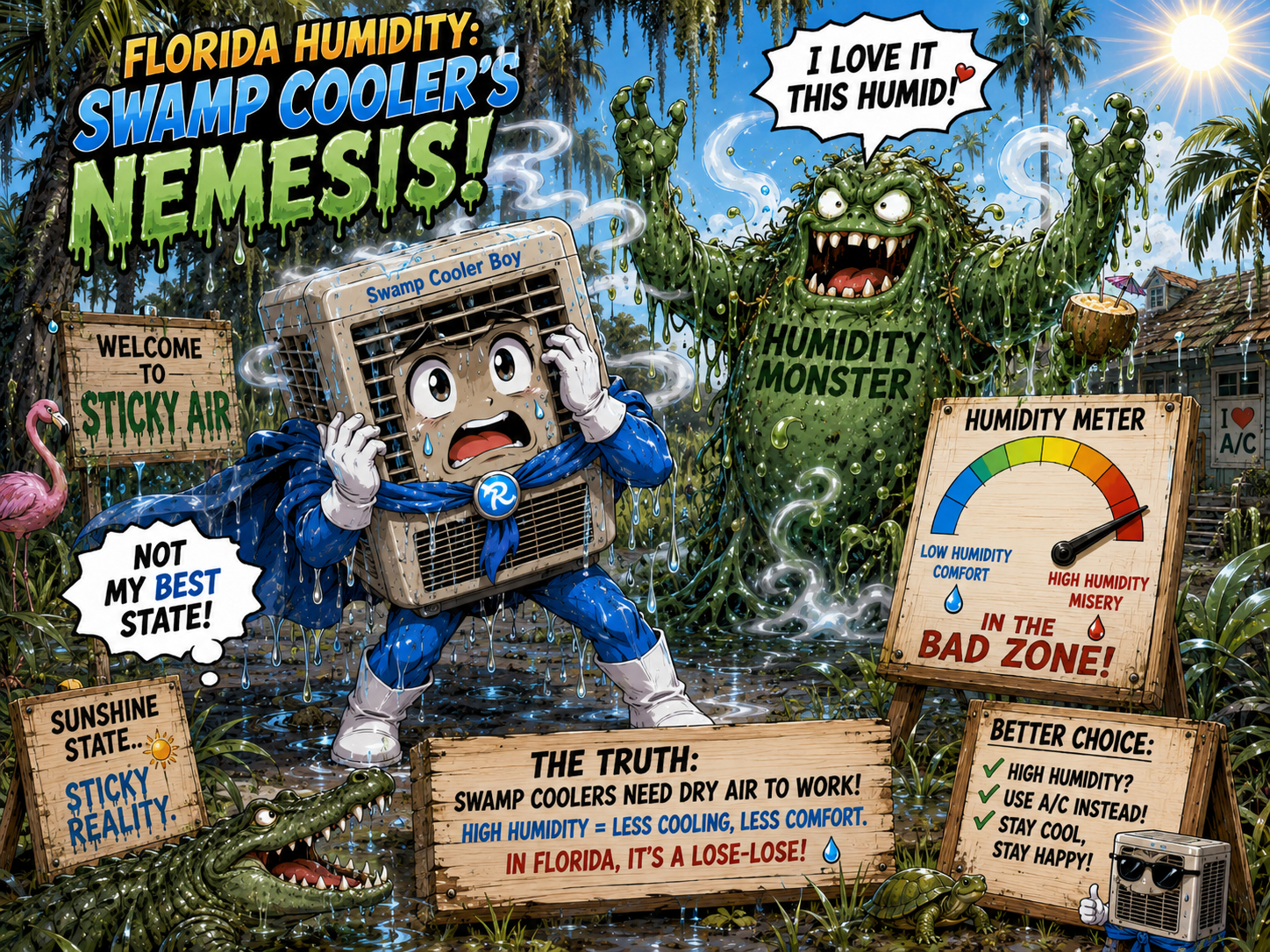
Swamp Cooler Boy overwhelmed by Humidity Monster in sticky humid air.

Scene 1

Swamp Cooler Boy arrives at the sticky coastal house.

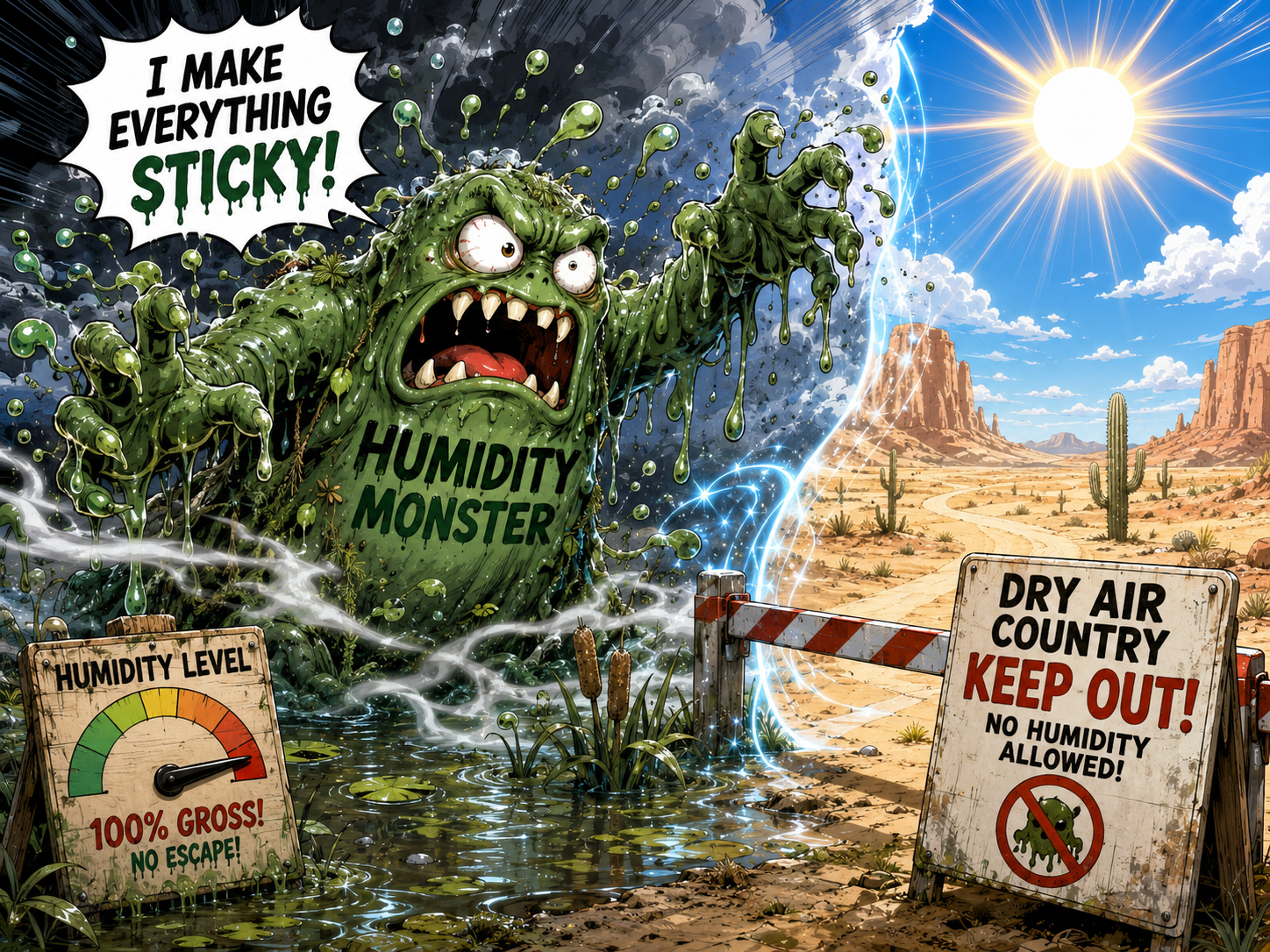
The house sits near the water. The air is heavy. Palm leaves droop. Every doorknob feels suspicious. Humidity Monster is already on the porch, drinking a coconut smoothie and smiling.

Swamp Cooler Boy: “Do not worry, citizens. I will cool this house with fresh air and evaporation!”
Humidity Monster: “Fresh air? My air? It is already full of moisture.”
Homeowner: “Can you at least make it less sticky?”
Humidity Monster: “Less sticky? That is not on today’s menu.”

Scene 2

The fan starts. The drama begins.

Swamp Cooler Boy turns on his fan. The water pad gets wet. The breeze begins. But instead of cool desert comfort, the house gets a damp puff of disappointment.

Swamp Cooler Boy: “Warm air in, wet pad, evaporation, cool air out!”
Humidity Monster: “Except the air is already wet. Where is your water supposed to go?”
Swamp Cooler Boy: “Why is my breeze wearing a wet sweater?”
Dry Air Sensei, arriving late: “Because you charged into the wrong climate.”

Scene 3

The humidity meter tells the truth.

Solar Fan Kid holds up the meter. The needle is not in the blue dry zone. It is buried in the red sticky zone. The meter makes a tiny sad sound.

Solar Fan Kid: “High humidity. Bad zone. The sun can power the fan, but it cannot make wet air dry.”
Swamp Cooler Boy: “So even with power, my cooling trick needs dry air?”
Dry Air Sensei: “Correct. Solar powers equipment. Climate powers evaporation.”
Humidity Monster: “I would like that stitched on a towel. A damp towel.”

Scene 4

Compressor Dragon gets the call.

Swamp Cooler Boy steps aside. For the first time, he understands that losing the wrong battle is not failure. It is wisdom.

A shadow crosses the sticky house. Compressor Dragon lands with coils, vents, and a dramatic electric guitar sound.

Swamp Cooler Boy: “This air is not my fight.”
Dry Air Sensei: “A true hero knows the climate.”
Humidity Monster: “Oh no. Not the moisture-control dragon.”
Compressor Dragon: “Step aside, little breeze. This is sticky-air work.”
Humidity Monster representing sticky humid air.

Episode lesson

High humidity blocks the evaporation trick.

Evaporative cooling needs air that can absorb water vapor. If the air is already carrying too much moisture, the cooling effect gets weak and comfort can feel sticky.

  • Humid air is already moisture-heavy.
  • Evaporation slows when air is near saturated.
  • Adding moisture can make indoor comfort worse.
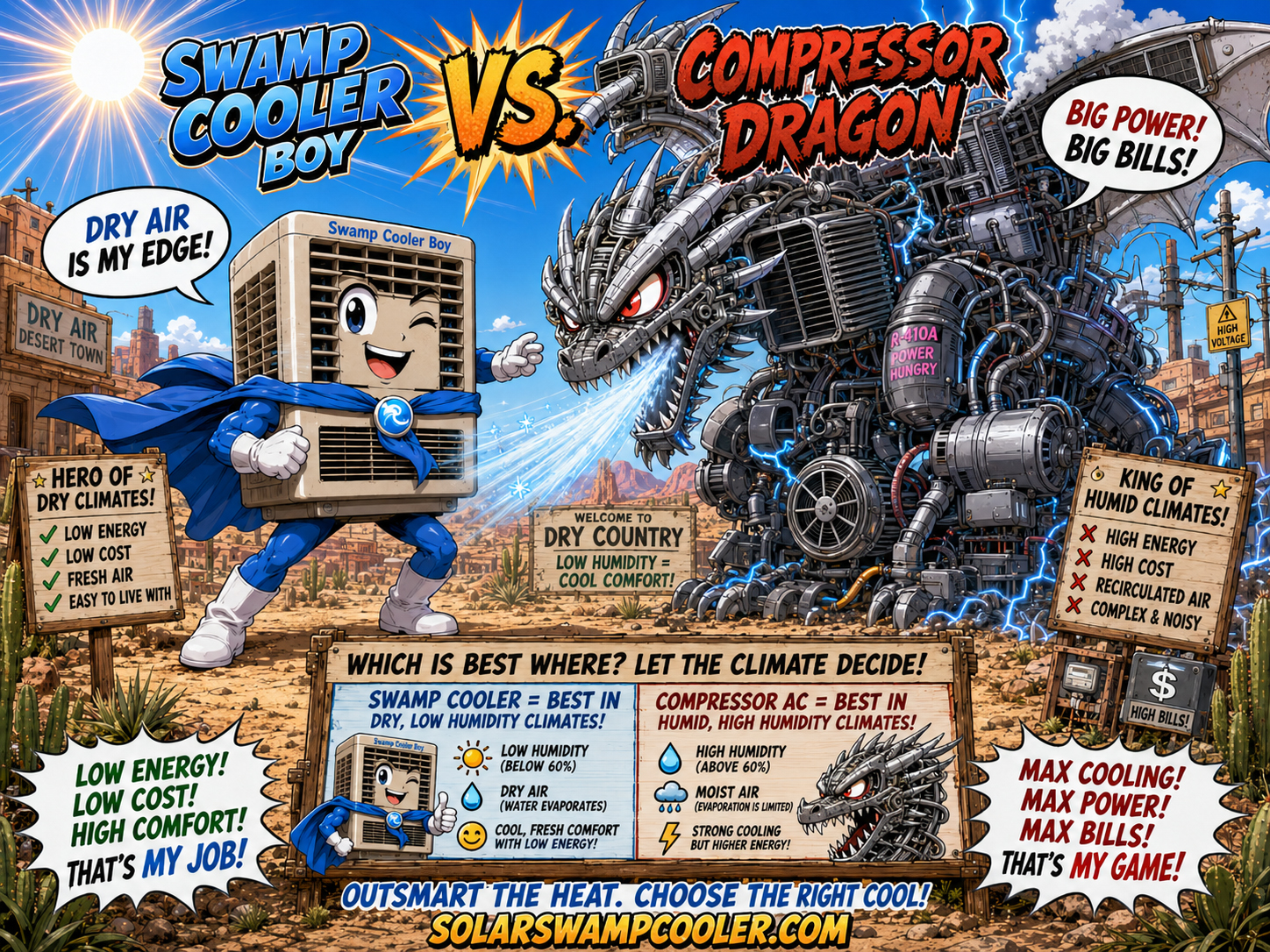
Compressor Dragon and Swamp Cooler Boy comparison.

Right tool lesson

Compressor AC is not always the villain.

In humid climates, refrigerated air conditioning is often the better tool because it can cool indoor air without depending on outside air being dry enough for evaporation.

  • Humid climates often need refrigerated cooling.
  • Moisture control is part of comfort.
  • Swamp coolers are climate-specific tools.

Humidity Monster’s attack pattern

How sticky air defeats the cooler.

Episode 3 is the warning episode. It protects homeowners from the most common mistake: buying an evaporative cooler without asking whether local air is dry enough.

Air starts wet

Coastal or humid air may already be carrying lots of water vapor.

Evaporation slows

The wet pad has less opportunity to evaporate water into the air stream.

Cooling drops

Less evaporation means less heat removed from the air.

Comfort suffers

The space can feel damp, sticky, and disappointing instead of cool.

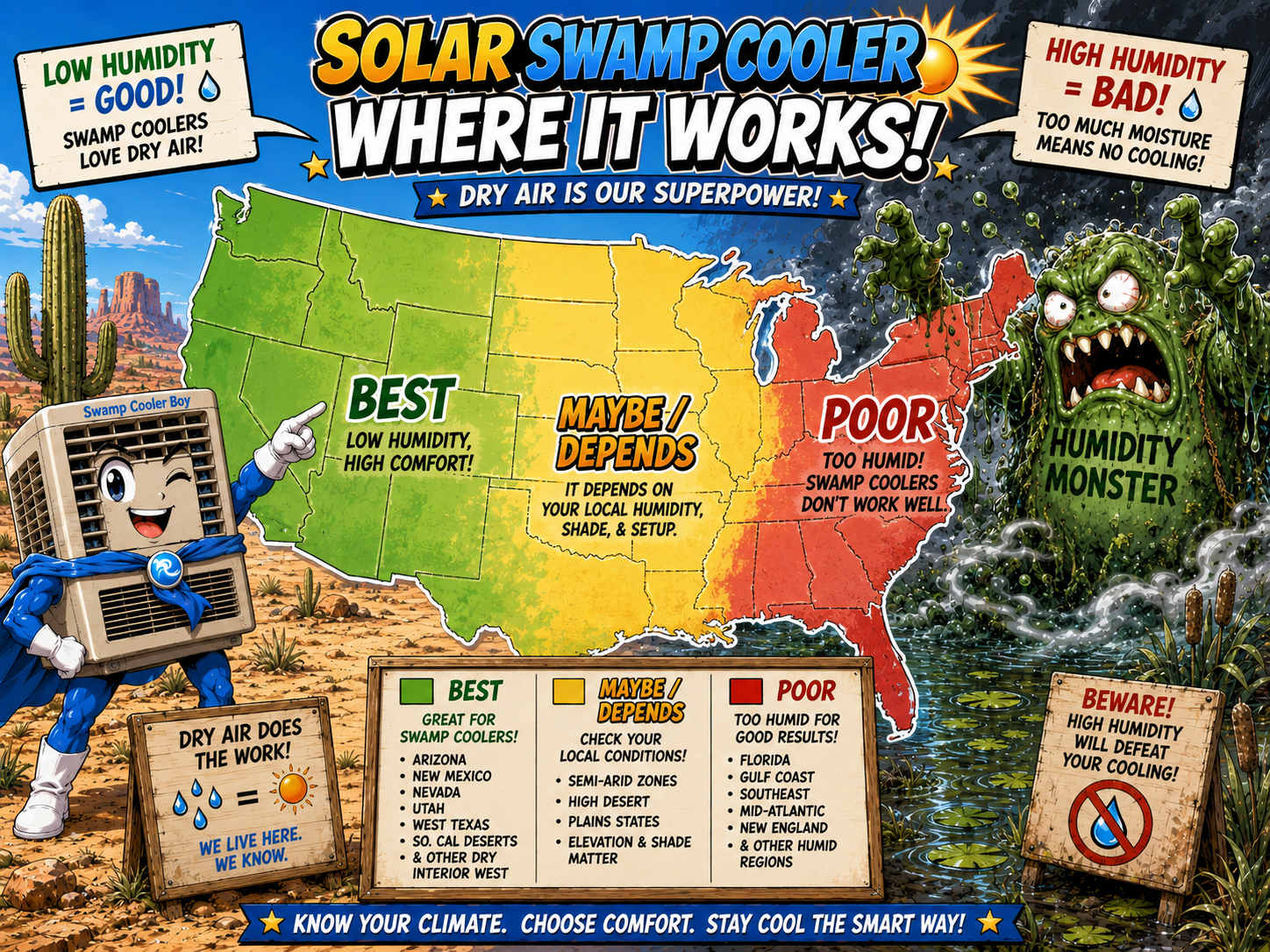
Comic map showing best, maybe, and poor zones for swamp coolers.

Map lesson

The red zones are warning zones.

Florida, the Gulf Coast, humid Southeast regions, and sticky coastal areas are not good primary targets for evaporative swamp cooling.

Borderline climates need real local humidity data. Dry days may work. Humid days may fail. Swamp Cooler Boy is not offended. He just wants the right battlefield.

Dry air = good Mixed air = check data Sticky air = bad

Episode 3 punchline

The cooler failed dramatically — and that was the lesson.

Swamp Cooler Boy did not lose because he was weak. He lost because humid air is the wrong climate. The right hero in the wrong place still gets soaked.

This episode is educational and comedic. It is not HVAC, electrical, solar, plumbing, health, or building-design advice. Actual performance depends on local humidity, temperature, airflow, sizing, pad condition, water quality, installation, operation, and maintenance.