Why is it called a swamp cooler if it does not work well in swamps?
Because someone had a terrible sense of geography. The machine is more properly understood
as an evaporative cooler. It works best when the air is dry enough for water to evaporate.
The name is funny because the best climate is often the opposite of a swamp.
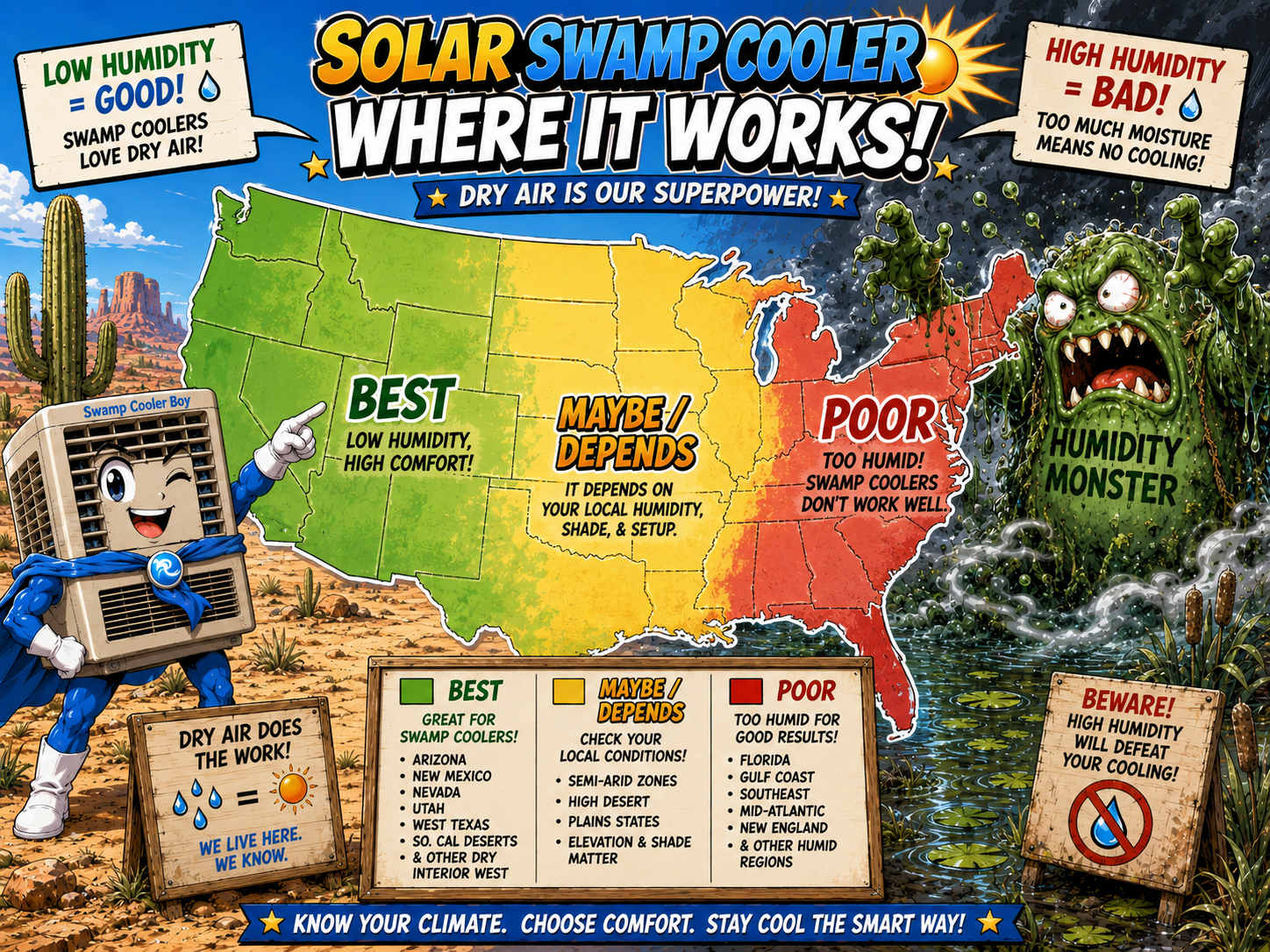
Where do swamp coolers work best?
They work best in hot, dry, low-humidity climates. Arizona, New Mexico, Nevada, Utah,
inland desert areas, high desert regions, and dry interior western climates are the classic
Swamp Cooler Boy success zones.
Where do swamp coolers usually work poorly?
They usually work poorly in humid climates such as Florida, the Gulf Coast, humid Southeast
regions, and many sticky coastal areas. When the air is already moisture-heavy, evaporation
is limited and the cooling effect drops.
What does low humidity have to do with cooling?
Low-humidity air has room to absorb more water vapor. When hot dry air passes through
a wet pad, water evaporates into the air stream. That evaporation carries heat away,
so the air leaving the cooler feels cooler.
Why does high humidity hurt performance?
High-humidity air is already carrying lots of moisture. Since evaporation slows when
air is already wet, the cooler has less ability to remove heat from the air stream.
That is Humidity Monster’s whole villain power.
Do I need to open windows when using a swamp cooler?
Yes, in typical evaporative cooling operation, air needs a path through the home.
Cool fresh air comes in from the cooler, and warmer air leaves through open windows
or vents. Do not run it like sealed-window compressor AC.
Can solar panels power a swamp cooler?
Solar panels can help power the electrical parts of a swamp cooler, especially the fan
and water pump, when the system is designed correctly. The nice logic is that hot sunny
daytime hours can match cooling demand.
Solar power does not make humid air dry. Climate still decides whether evaporation works well.
Does a swamp cooler use water?
Yes. Water use is part of evaporative cooling. Water evaporates from the pad into dry air,
and that evaporation creates the cooling effect. Water use is not a defect; it is the cooling method.
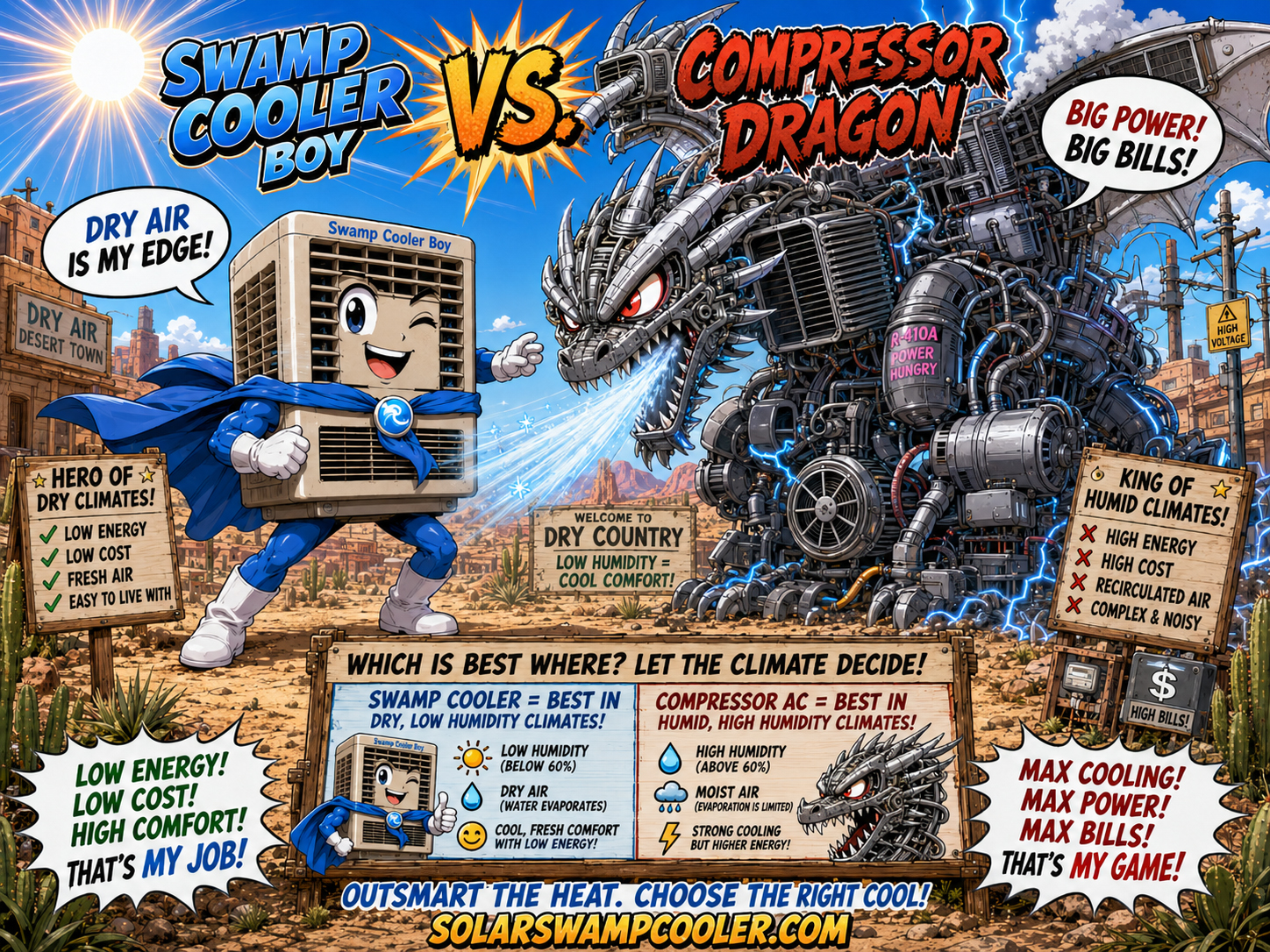
Is a swamp cooler cheaper to run than traditional AC?
Often, a swamp cooler’s fan and pump loads can be much simpler than compressor AC loads,
but actual cost depends on the equipment, runtime, climate, water cost, local electric rates,
maintenance, and comfort expectations.
Is traditional AC always worse?
No. Compressor Dragon is not always the villain. In humid climates, traditional refrigerated
air conditioning is usually the better tool because it can cool without relying on outdoor
air being dry enough for evaporation.
Can I use both a swamp cooler and AC?
In some mixed climates, homeowners may use evaporative cooling during dry periods and
compressor AC during humid or extreme comfort periods. The key is understanding when each
tool belongs in the fight.
What is the difference between portable and whole house swamp coolers?
Portable coolers are usually spot-cooling helpers for small areas. Whole house evaporative
coolers are building-airflow systems. They move fresh air through the home and need correct
window or vent strategy.
What maintenance does a swamp cooler need?
Maintenance can include inspecting pads, replacing worn or mineral-loaded pads, cleaning the pan,
checking the pump and water lines, confirming even water flow, keeping airflow clear, and performing
seasonal shutdown correctly.
Who is Mold Goblin?
Mold Goblin is the comedy villain who appears when water systems are neglected.
Dirty pads, standing water, clogged flow, and poor shutdown habits make him very happy.
Clean maintenance makes him very small.
Does water quality matter?
Yes. Hard water and mineral buildup can affect pads, pans, pumps, water distribution,
and maintenance intervals. Local water conditions can change how often parts need attention.
Is SolarSwampCooler.com HVAC advice?
No. SolarSwampCooler.com is educational and comedic. It helps explain basic concepts,
but equipment should be selected, sized, installed, wired, operated, and maintained according
to manufacturer instructions, local codes, utility requirements, and licensed professional
guidance where required.