Swamp Cooler Boy vs Compressor Dragon

Swamp Cooler vs AC

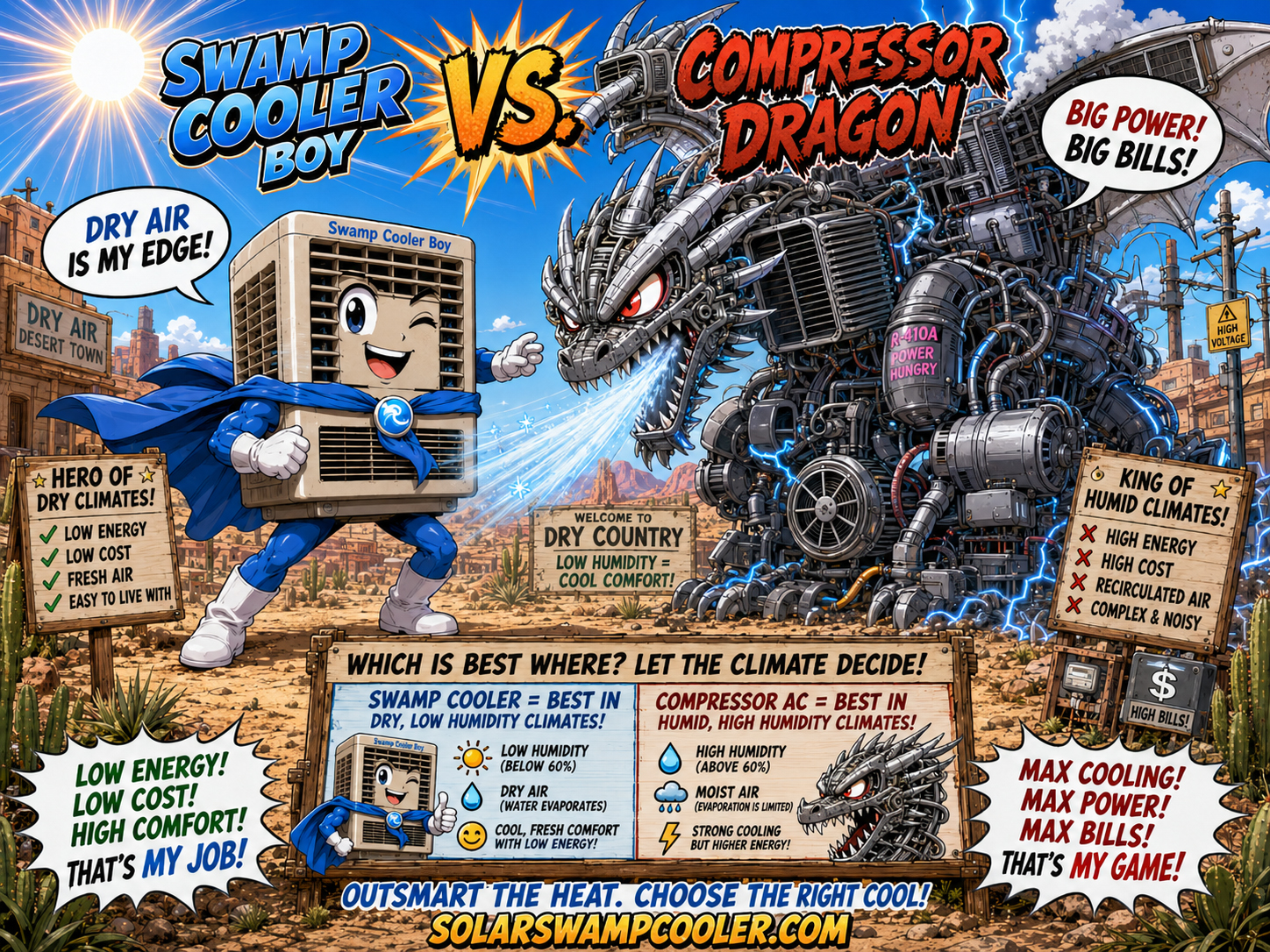
This is not a fanboy fight. It is a climate decision. Swamp coolers can be brilliant in dry air. Compressor air conditioning is usually the heavyweight champion in humid air.

The big idea

Different machines. Different physics. Different best uses.

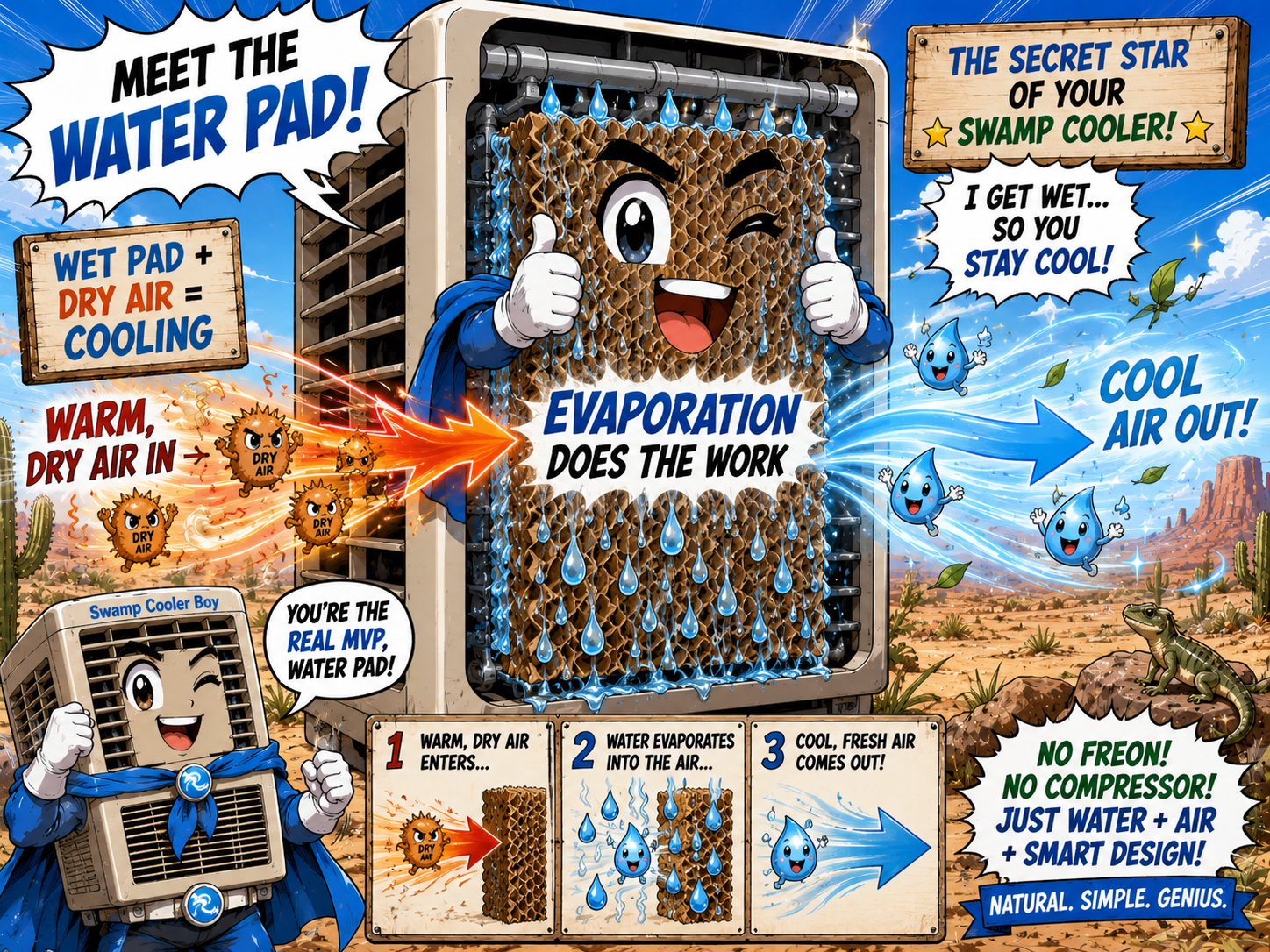
A swamp cooler uses evaporative cooling: outdoor air, water, a wet pad, and airflow. Compressor AC uses refrigeration: a compressor, refrigerant cycle, indoor coil, outdoor coil, and controlled indoor air.

SolarSwampCooler.com makes the comparison funny because the homeowner lesson is serious: do not buy the wrong tool for the climate. Dry air gives Swamp Cooler Boy his edge. Humid air gives Compressor Dragon the advantage.

  • Swamp coolers are strongest in hot, dry, low-humidity climates.
  • Compressor AC is stronger where humidity and moisture control matter.
  • Swamp coolers need airflow through the home, not sealed-window operation.
  • AC can cool sealed indoor air but usually uses more complex equipment.
Swamp Cooler Boy versus Compressor Dragon in a comic comparison poster.
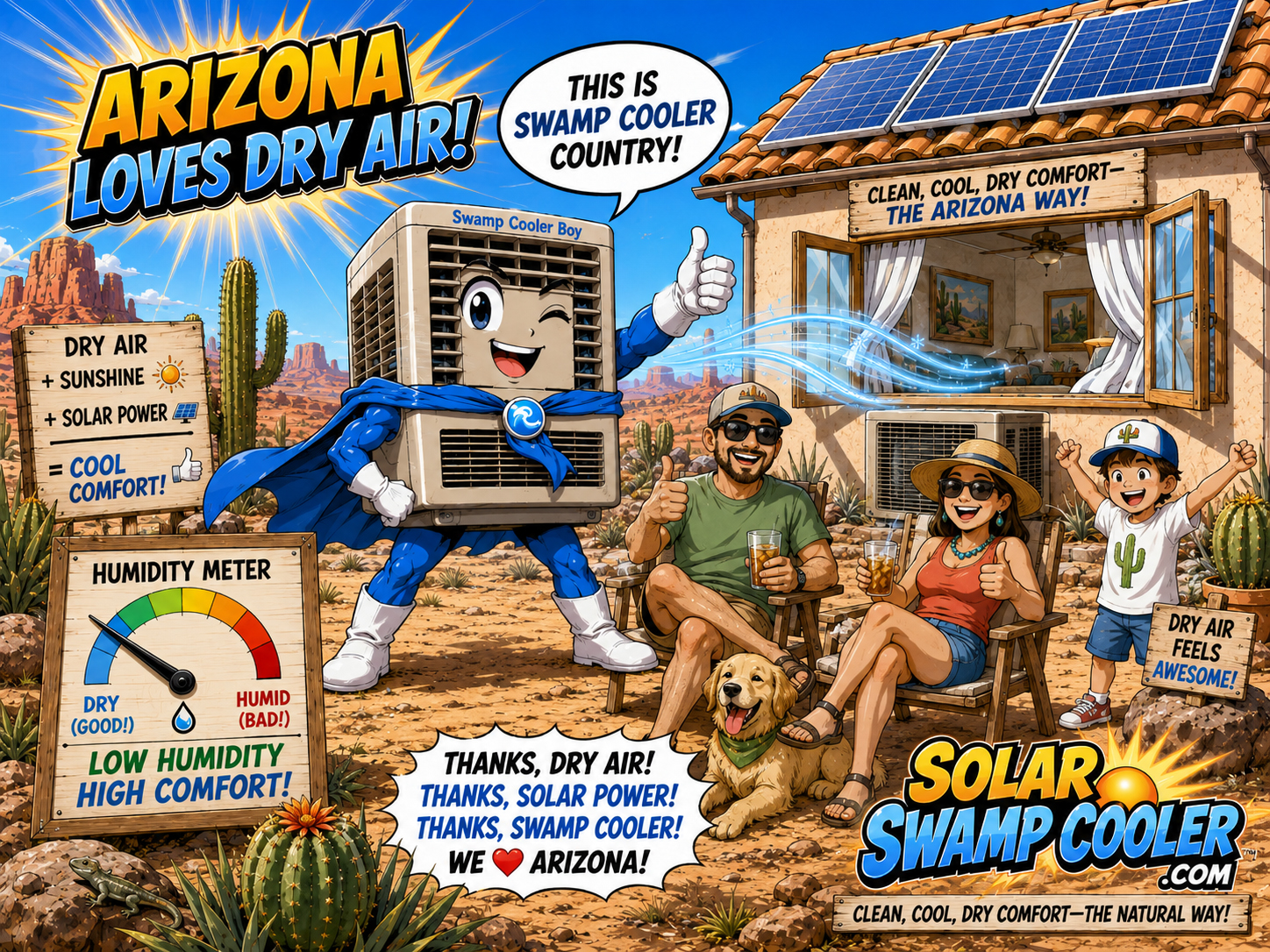
Arizona dry air success with swamp cooler and solar panels.

Swamp cooler advantage

Dry air makes simple cooling powerful.

In dry climates, evaporative cooling can make sense because the air has room to absorb moisture. The fan pulls air through a wet pad, evaporation carries heat away, and fresh cooler air moves through the building.

Low humidity Fresh air Simple loads
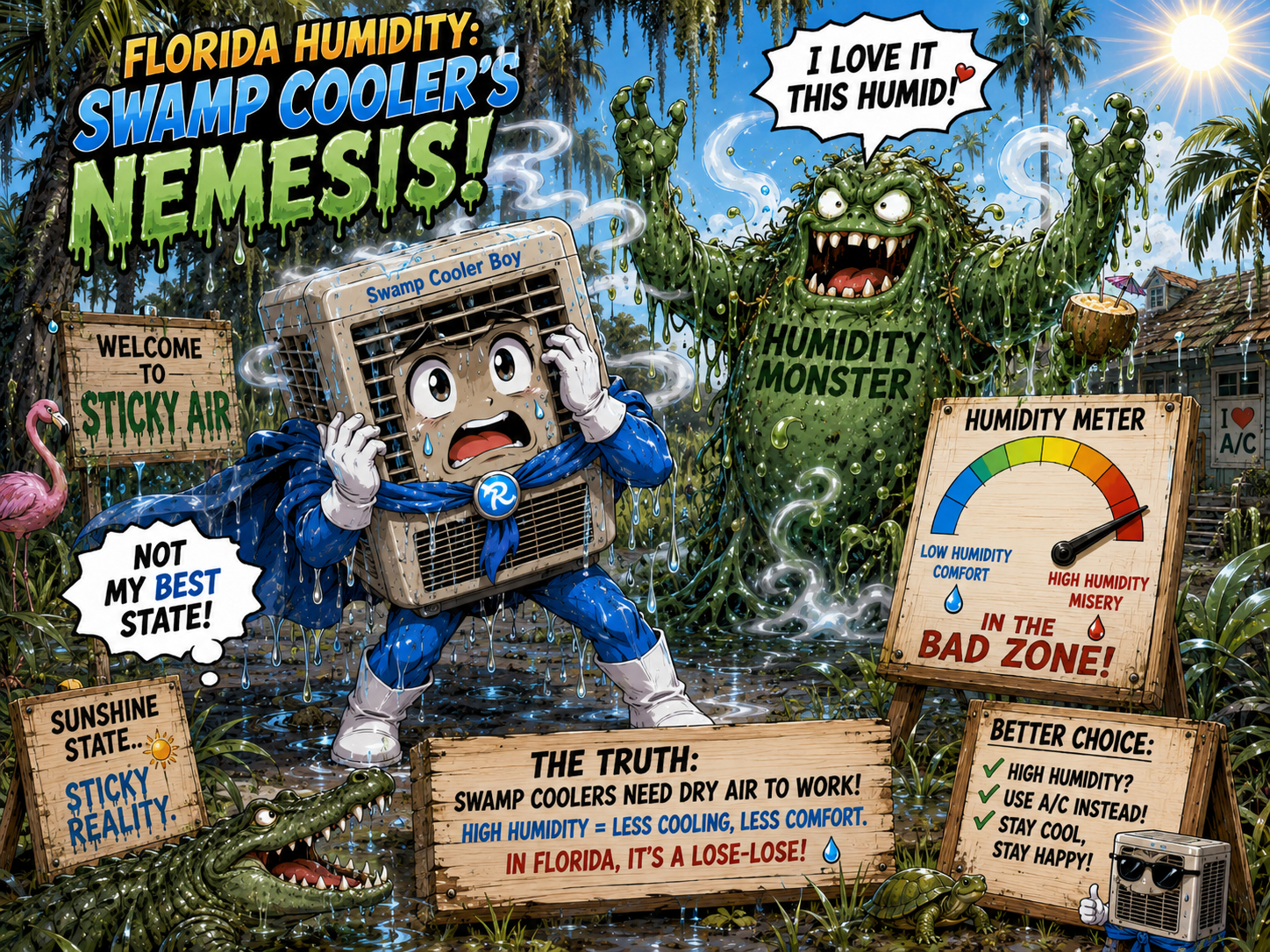
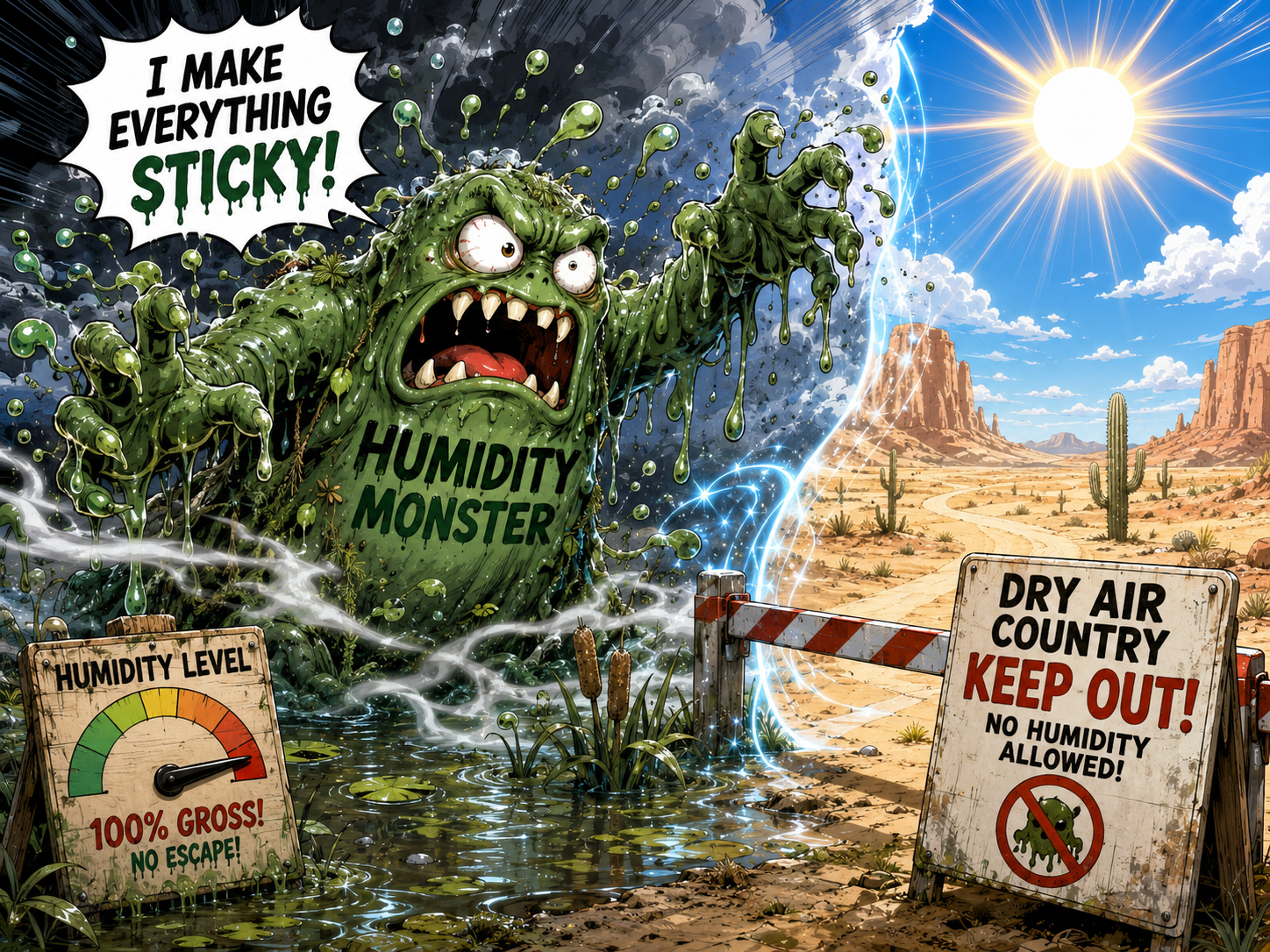
Florida humidity defeats Swamp Cooler Boy while Humidity Monster celebrates.

AC advantage

Humid air needs the heavyweight tool.

In sticky climates, air is already carrying moisture. Evaporation slows down, cooling performance drops, and adding moisture can make comfort worse. That is where refrigerated AC usually wins.

High humidity Moisture control Compressor country

Head-to-head table

Which system fits the mission?

Desert Grandma does not ask, “Which machine sounds cooler?” She asks, “What is the climate, what is the comfort goal, and what are you willing to maintain?”

Question Swamp cooler Compressor AC
Cooling method Evaporates water into dry air to reduce air temperature. Uses a refrigeration cycle to move heat out of indoor air.
Best climate Hot and dry, low humidity, desert or high desert conditions. Humid, mixed, coastal, and sealed-building comfort conditions.
Airflow style Fresh outside air moves through the home and exits through openings. Indoor air is typically recirculated and cooled in a more sealed environment.
Moisture effect Adds moisture to the air as part of cooling. Can remove moisture from indoor air as part of the cooling process.
Energy story Often fan and pump loads; solar can be a strong daytime story. Compressor loads can be larger, especially in peak heat and high SCE-rate conditions.
Water story Uses water for evaporation and needs water-path maintenance. Does not use water for the main cooling cycle in typical home AC systems.
Maintenance villain Mold Goblin, Scale Gremlin, dirty pads, pans, pumps, and water flow. Compressor Dragon: refrigerant system, coils, filters, condensate, and service complexity.
Worst mistake Installing it in humid air or running it like sealed-window AC. Oversizing, poor ducts, dirty coils, bad maintenance, and ignoring peak electricity cost.
Dry Air Sensei explains low humidity evaporative cooling.

Swamp Cooler Boy’s case

In dry air, the simple machine can look brilliant.

A swamp cooler can be attractive because it moves fresh air, uses evaporation, and can avoid the heavy compressor load of conventional AC in the right conditions.

But the “right conditions” are not optional. Dry air is the engine. Open airflow is the operating method. Maintenance is part of the deal.

  • Works best when outdoor air is hot and dry.
  • Needs open windows or vents so air can move through the home.
  • Uses water and needs pad, pan, pump, and water-flow care.
  • Can pair nicely with solar during hot sunny daytime hours.

Compressor Dragon’s case

In humid air, the dragon earns his roar.

Compressor AC is more complex and can use substantial electricity, but it is the correct tool in many humid climates because it can cool indoor air without relying on outside dry air.

That matters in places like Florida, the Gulf Coast, and humid summer regions where evaporative cooling can add moisture without creating enough comfort.

  • Better suited for humid climates and sealed indoor comfort.
  • Can help manage indoor moisture while cooling.
  • Uses compressor-driven refrigeration rather than evaporation.
  • May need solar and battery strategy because peak electric costs can be painful.
Humidity Monster representing sticky air that favors compressor AC over swamp coolers.

Pick swamp cooler when

The air is dry enough.

Dry climate, fresh-air comfort, open-window operation, water use accepted, and maintenance understood.

Dry air Fresh airflow

Pick AC when

The air is sticky.

Humid climate, sealed-home comfort, moisture control needs, and stronger cooling requirements.

Humidity Moisture control

Pick both when

The climate is mixed.

Some homes may use evaporative cooling during dry periods and AC when humidity or comfort demands require it.

Hybrid comfort Seasonal logic
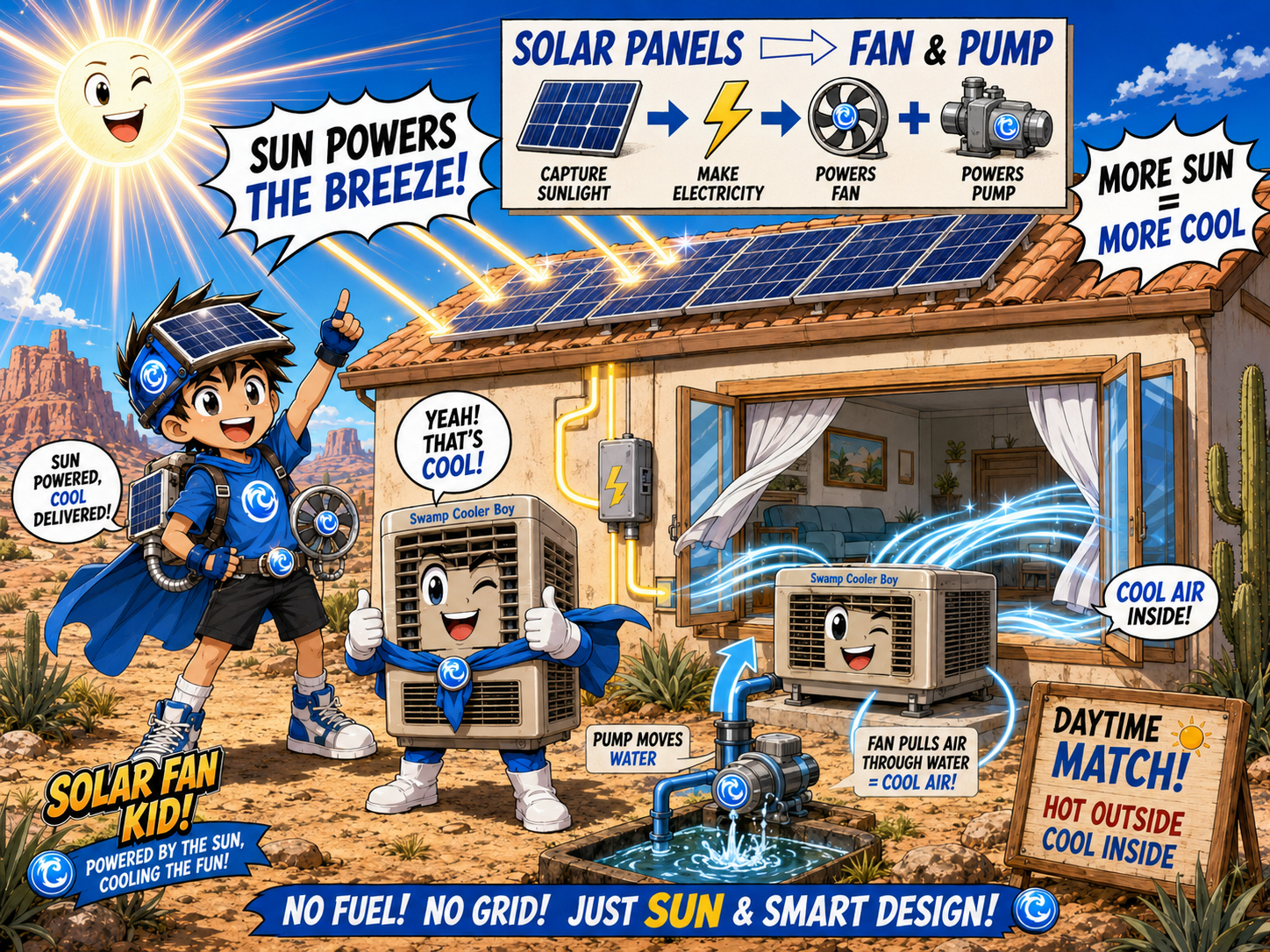
Solar panels powering swamp cooler fan and pump.

Solar + swamp cooler

Sun powers the breeze.

Swamp coolers can make an appealing solar story because hot sunny dry days align with fan and pump operation. But solar does not fix high humidity.

  • Fan and pump loads can be solar-friendly.
  • Daytime cooling can match daytime solar production.
  • Climate still decides cooling performance.
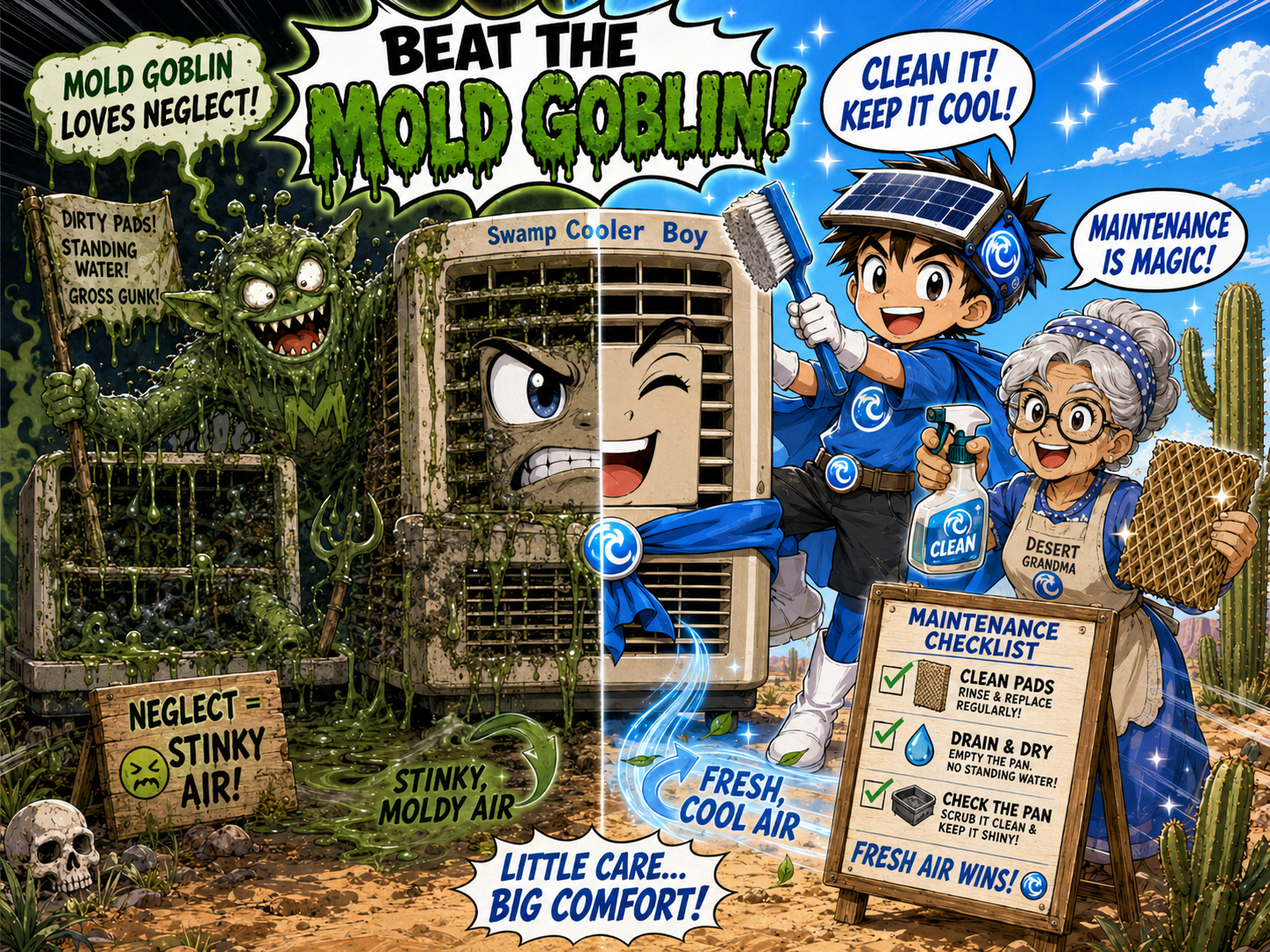
Mold Goblin maintenance warning for swamp coolers.

Water + swamp cooler

Water is the cooling tradeoff.

Swamp coolers may reduce compressor energy use in the right climate, but they use water and need water-path maintenance. No free lunch. Just a different lunch.

  • Water evaporates to create cooling.
  • Pads and pans need maintenance.
  • Water quality can affect performance.

Bad sales pitch detector

Watch for one-size-fits-all cooling claims.

The right answer depends on climate, building, usage, rates, comfort expectations, water quality, and maintenance. Any pitch that ignores humidity is inviting the wrong villain.

“Works anywhere!”

No. Evaporative cooling is climate-dependent. Humidity matters.

“No maintenance!”

No. Water pads, pans, pumps, and airflow need care.

“Solar fixes it!”

No. Solar can power equipment, but it cannot make humid air dry.

“AC is always bad!”

No. Compressor AC is often the right tool in humid climates.

This page is educational and comedic. It is not HVAC, electrical, solar, plumbing, or building-design advice. Cooling systems should be selected, sized, installed, wired, operated, and maintained according to manufacturer instructions, local codes, utility requirements, water quality conditions, and licensed professional guidance where required.

The final verdict

Swamp cooler in dry air. AC in sticky air. Think before buying.

Swamp Cooler Boy and Compressor Dragon are not enemies. They are different tools. The homeowner wins by matching the tool to the climate, the house, and the comfort goal.