Beat the Mold Goblin

Swamp Cooler Maintenance

Swamp coolers use water, pads, pans, pumps, airflow, and outdoor air. That means maintenance is not optional. Desert Grandma says: “Fresh air wins when the water path stays clean.”

The practical truth

Water systems need care.

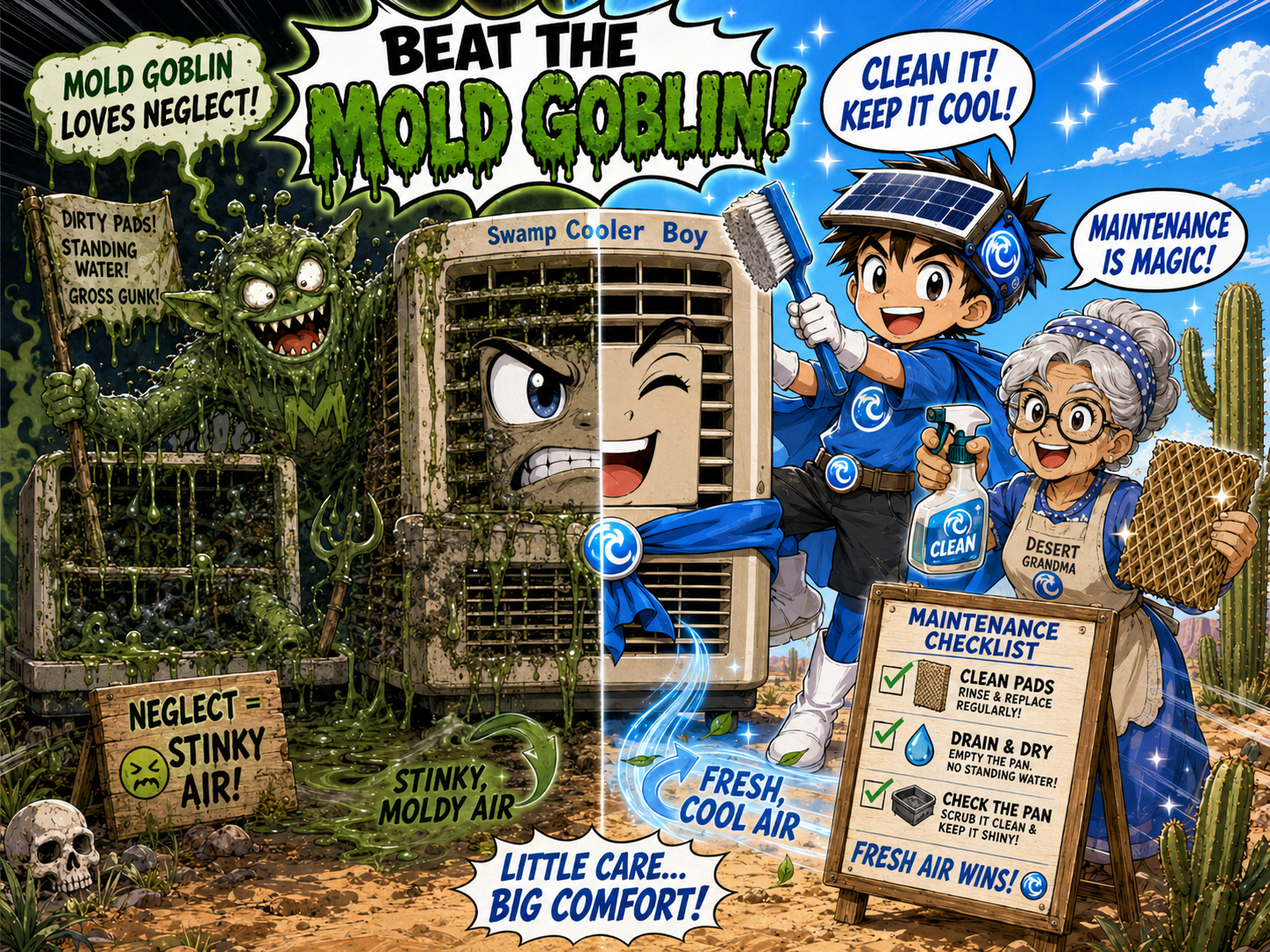
A swamp cooler is simple compared with compressor air conditioning, but simple does not mean forgettable. If pads get dirty, water flow gets blocked, pans collect grime, or wet parts sit neglected, the Mold Goblin gets a house key.

Maintenance protects comfort, airflow, smell, performance, and equipment life. The exact schedule depends on manufacturer instructions, water quality, dust, local climate, usage hours, and seasonal shutdown needs.

  • Inspect pads and replace them when worn, clogged, mineral-loaded, or dirty.
  • Keep the water pan clean and free of standing grime.
  • Confirm the pump distributes water evenly across the pad.
  • Drain, dry, and shut down properly when the season ends.
Mold Goblin maintenance warning for swamp coolers with cleaning checklist.

The Mold Goblin’s favorite menu

Neglect turns cool air into gross air.

Mold Goblin does not care if the unit is portable or whole house. Give him dirty pads, standing water, blocked flow, and warm neglect, and he will start writing his villain speech.

Dirty pads

Clogged or old pads can block airflow, reduce cooling, and hold contaminants.

Standing water

Water that sits dirty in a pan can create smell, slime, and maintenance trouble.

Blocked water flow

If the pad is not evenly wet, the cooler cannot perform the evaporation trick correctly.

Seasonal neglect

End-of-season shutdown matters. Drain, dry, and follow manufacturer directions.

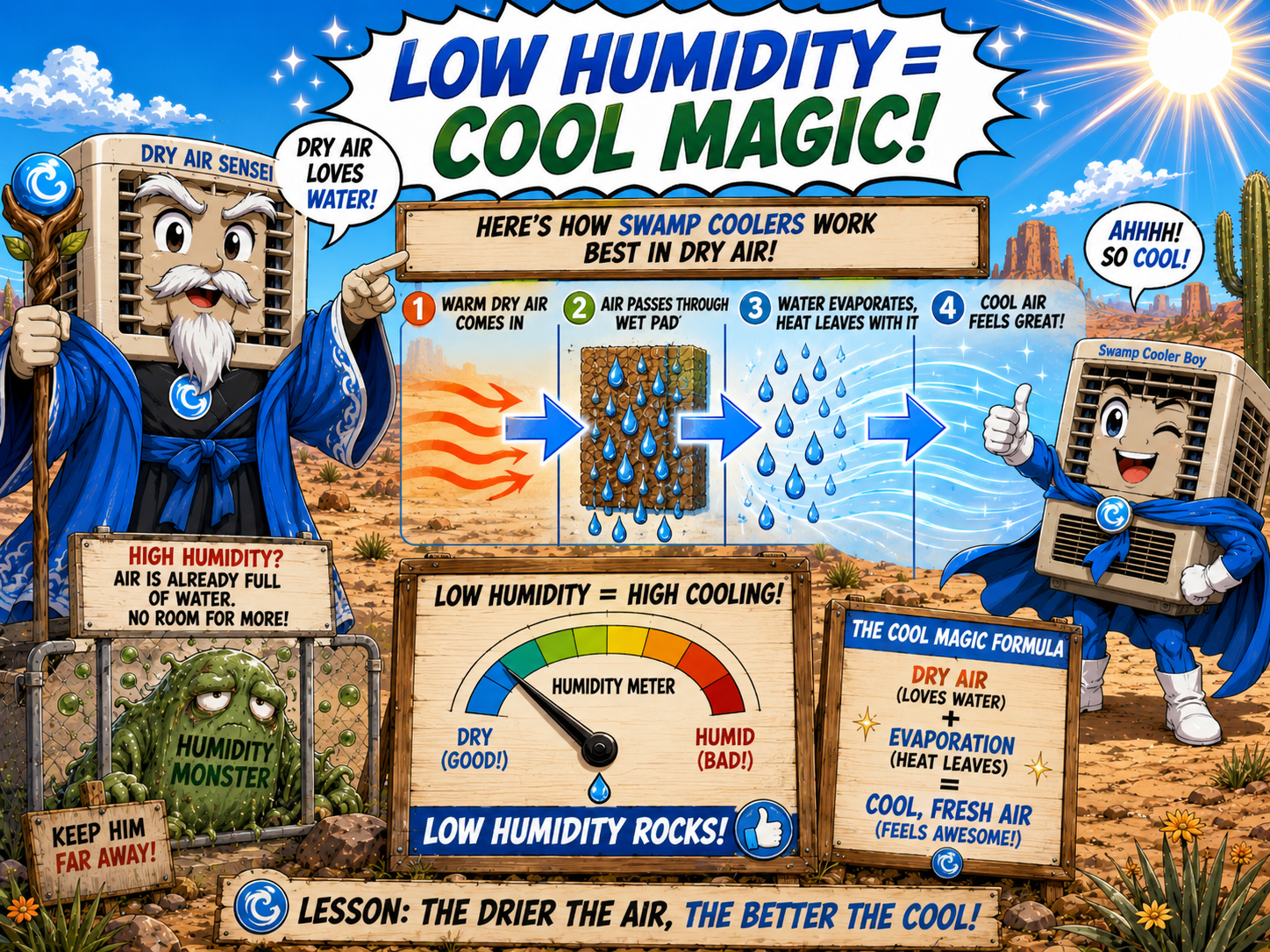
Close-up comic explainer of swamp cooler water pad and evaporation.

Pad care

The Water Pad is the MVP.

The pad is where air meets water. If the pad is clogged, scaled, sagging, dry in spots, or falling apart, the whole cooling story gets weaker.

  • Inspect for mineral buildup and clogging.
  • Replace pads according to manufacturer guidance.
  • Confirm water is reaching the full pad surface.
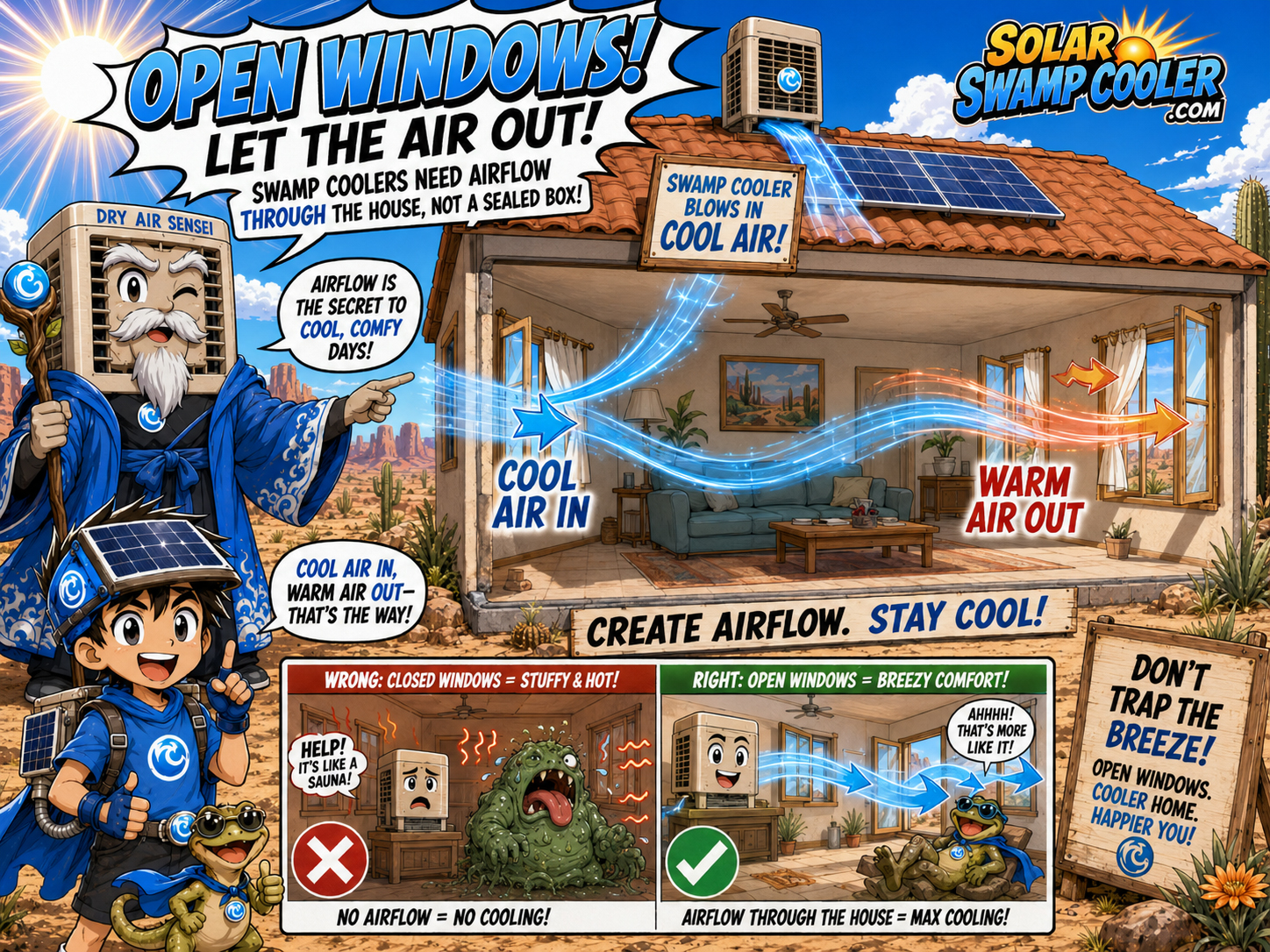
Cutaway house showing correct airflow with open windows.

Airflow care

Clean pads still need open paths.

Maintenance is not only cleaning. It is also operation. Swamp coolers need air moving through the house. Sealed-window habits can make a good unit feel bad.

  • Open the correct windows or vents.
  • Let warmer air leave the home.
  • Do not trap the breeze in a sealed box.
Desert Grandma gives practical swamp cooler advice.

Desert Grandma’s rule

Experience beats hype.

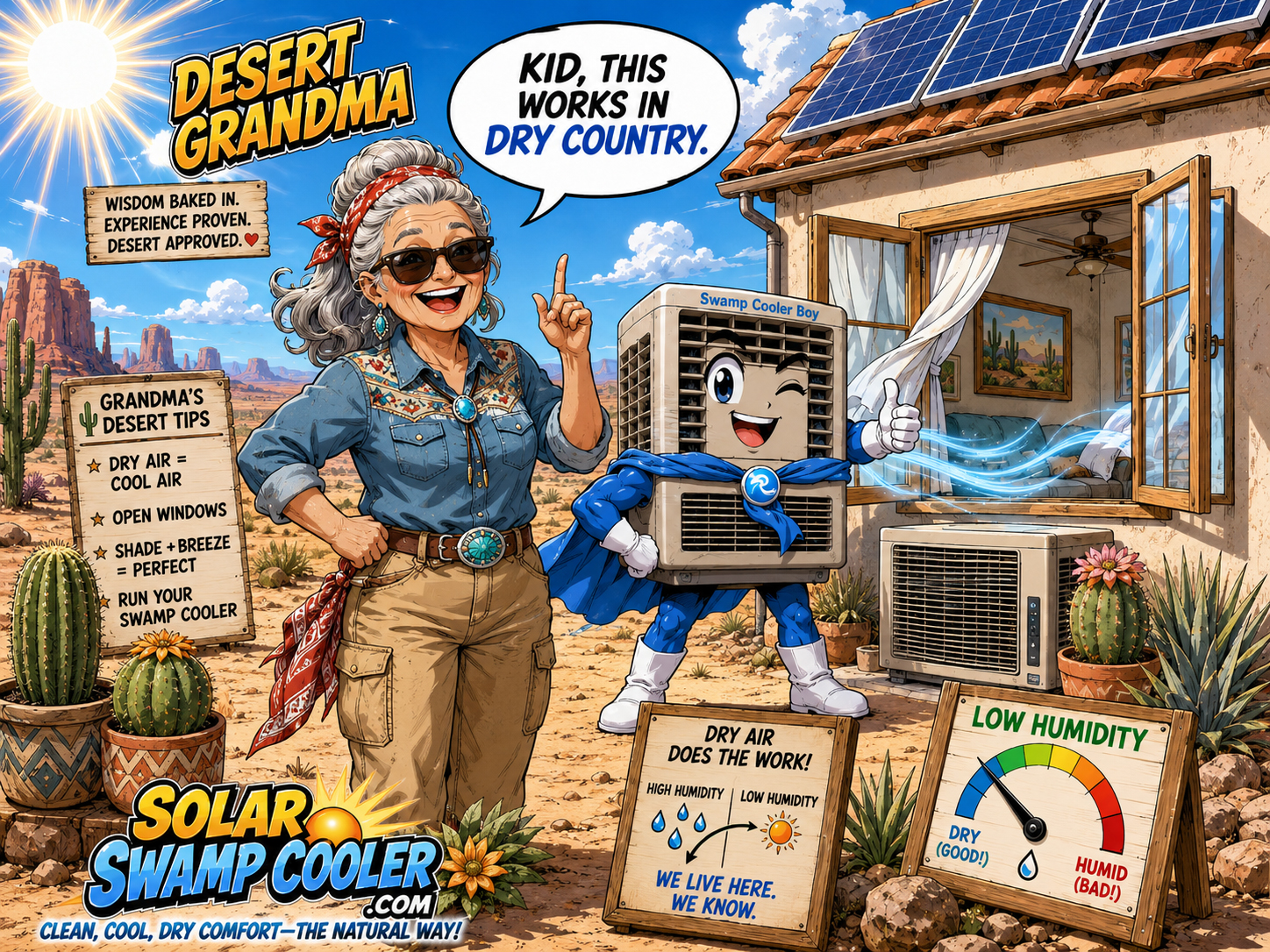
Desert Grandma knows that a swamp cooler is not just a purchase. It is a seasonal habit. Use it in dry air, give it airflow, keep it clean, and do not ignore the water path.

The best maintenance program is boring in the real world and funny in the manga: clean pads, clean pan, clear water flow, fresh air, and no Mold Goblin.

Clean pads Clean pan Good water flow Fresh airflow No Mold Goblin

Maintenance checklist

Fresh air wins when the system stays clean.

Use this as a homeowner-friendly reminder, not as a replacement for the manufacturer’s instructions. Different coolers, pads, water conditions, and climates need different care.

Item What to check Manga warning Why it matters
Pads Condition, mineral buildup, clogging, even wetting, correct replacement type. The Water Pad loses MVP status. Bad pads reduce airflow and evaporation.
Water pan Slime, sediment, standing dirty water, corrosion, leaks. Mold Goblin opens a swamp spa. Clean water handling supports smell, hygiene, and equipment life.
Pump and water lines Flow, clogs, leaks, distribution tubing, pump operation. Dry Air Sensei sees dry pad spots. Uneven water flow means uneven cooling.
Fan and airflow Air movement, motor condition, belt if applicable, grilles, filters or screens. Swamp Cooler Boy cannot breathe. The system depends on moving air through the wet pad and house.
Seasonal shutdown Drain, dry, clean, cover or protect as appropriate for the unit and climate. Mold Goblin waits for next season. Shutdown prevents avoidable off-season problems.

Water quality matters

Hard water can make the pad work harder.

Mineral buildup can clog pads, reduce airflow, and shorten pad life. In some regions, water quality is a major part of swamp cooler maintenance.

If pads look crusty, water distribution is uneven, or airflow drops, Desert Grandma does not blame the cartoon first. She checks the pad, pump, pan, lines, and water quality.

  • Watch for mineral scale on pads and water parts.
  • Replace pads when cleaning is no longer enough.
  • Use the pad type recommended for the cooler.
  • Follow manufacturer guidance for cleaning products and service intervals.
Water pad close-up showing air, water, and evaporation.

Daily / use habit

Operate with airflow.

Crack the correct windows or vents so air can move through instead of pressurizing a closed room.

Regular inspection

Look before it smells.

Check pads, pan, water flow, and debris before the cooler tells you something is wrong.

Seasonal closeout

Drain and dry.

End the cooling season cleanly. Do not leave the Mold Goblin a winter vacation home.

The final lesson

A clean swamp cooler is a happier swamp cooler.

Dry air gives the cooling magic. Solar can power the breeze. But maintenance keeps the water path from turning into the villain’s lair.

This page is educational and comedic. It is not HVAC, electrical, plumbing, health, or mold-remediation advice. Follow the manufacturer’s instructions, local codes, water quality guidance, and licensed professional recommendations where required. Disconnect power and use proper safety procedures before inspecting or servicing equipment.