Solar Fan Kid enters the story

Solar Powered Swamp Coolers

The best comedy is also the best logic: hot sunny dry days are exactly when solar panels are producing and exactly when a swamp cooler fan and pump may be useful.

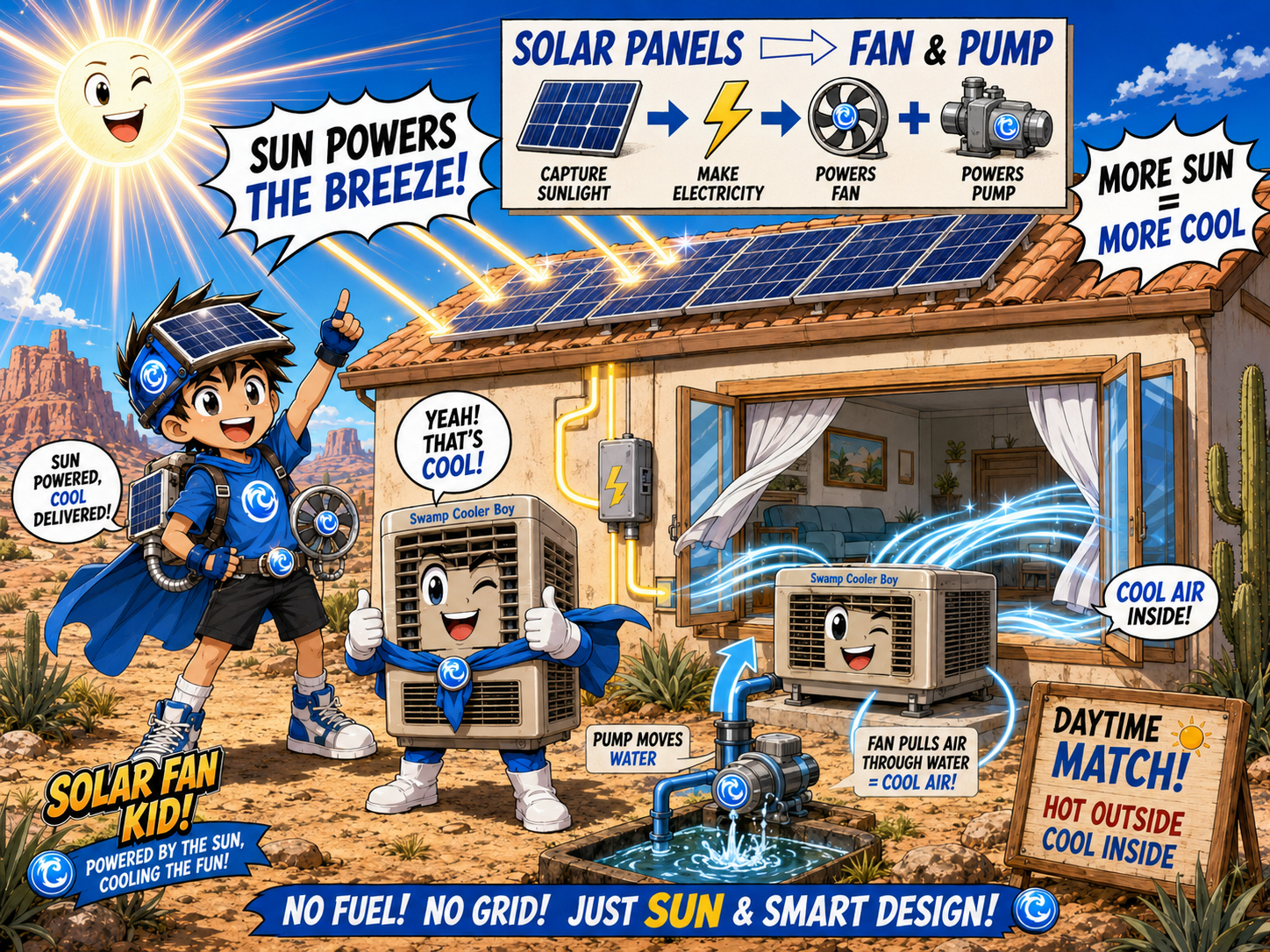
Sun powers the breeze

Solar panels, fan, pump, wet pad, cool air.

A swamp cooler is not a compressor-heavy air conditioner. Its basic electrical loads are usually the fan that moves air and the pump that moves water. That makes the solar story easy to explain visually.

Solar Fan Kid’s lesson is simple: when the sun is blasting a dry desert house, solar panels can help power the equipment that moves air through the wet pad. More sun, more daytime cooling demand, more reason to think about solar design.

  • Solar panels capture sunlight during hot daytime hours.
  • Electricity helps run the swamp cooler fan and water pump.
  • The fan pulls outside air through the wet pad.
  • Cooler fresh air moves through the home when windows are properly opened.
Solar panels power the swamp cooler fan and pump in a sunny desert home.

The solar cooling chain

Sun → panels → fan and pump → wet pad → cool airflow.

SolarSwampCooler.com turns the system into a comic sequence so the homeowner can see how the parts relate before getting lost in equipment jargon.

Sun hits panels

Sunny dry days give the panels a natural production window.

Power runs equipment

The fan moves air and the pump keeps the evaporative pad wet.

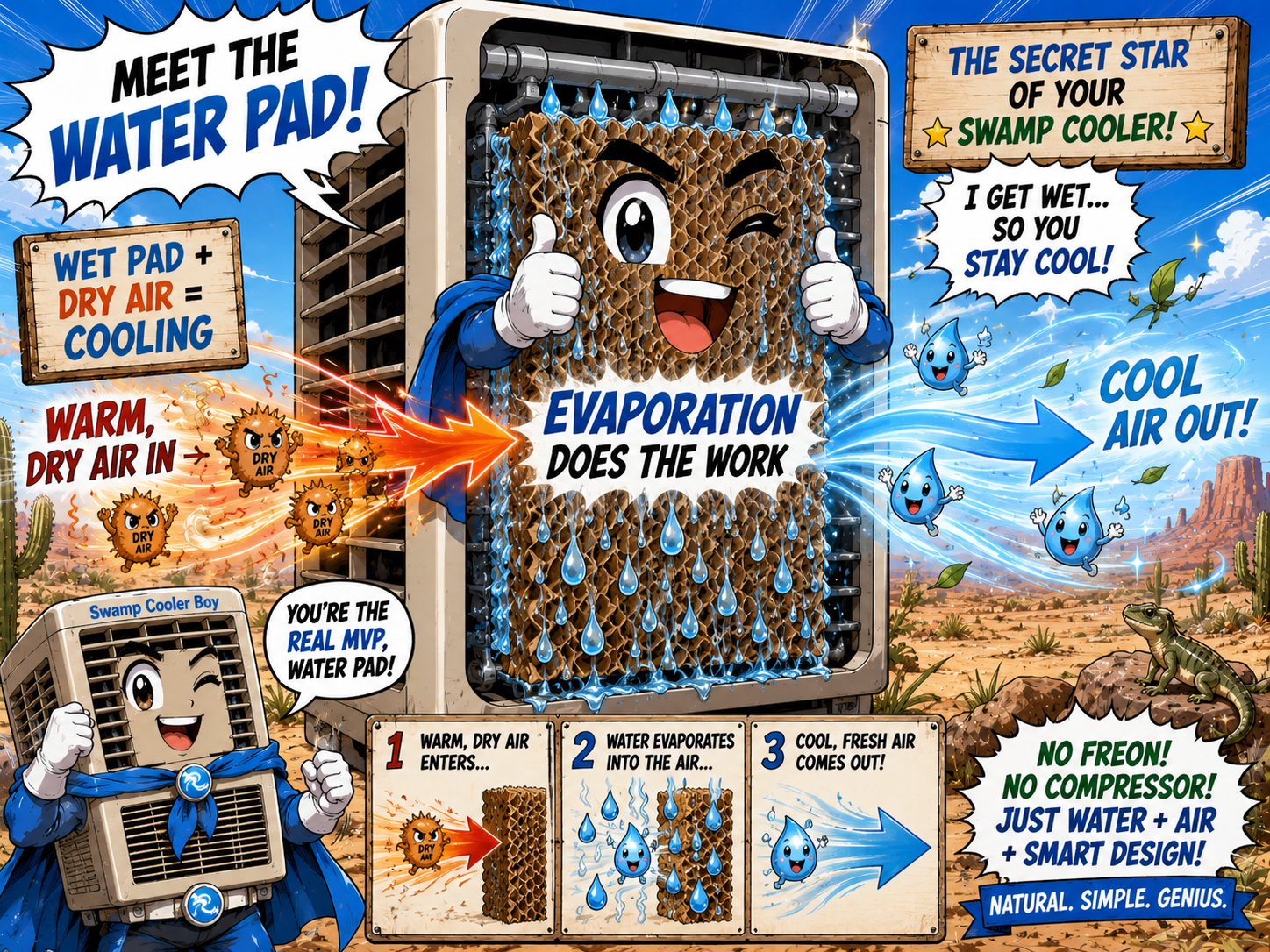
Dry air crosses water

Evaporation works best when the incoming air is low-humidity.

Airflow cools the home

Open windows let cool fresh air move in and warm air move out.

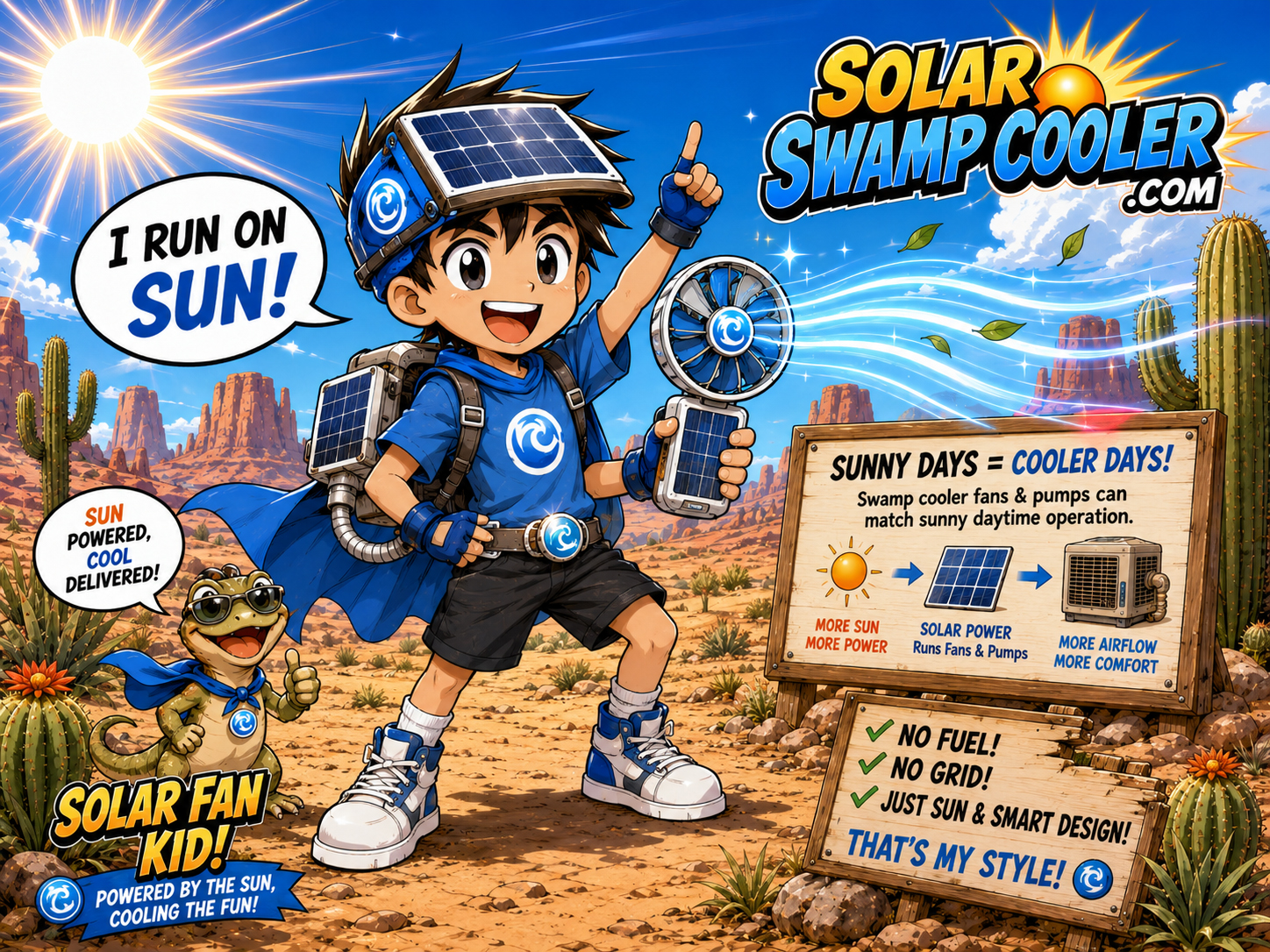
Solar Fan Kid character poster with a solar powered fan.

Character lesson

Solar Fan Kid runs on sun.

Solar Fan Kid is the bridge between the solar story and the cooling story. He explains that the fan and pump are not magic: they need power, and sunny hours can line up beautifully with cooling demand.

Sun Fan Pump Daytime match
Cutaway house showing swamp cooler airflow with open windows.

Airflow lesson

Solar power does not replace ventilation.

Even with solar, the cooler still needs airflow through the home. The system is not “seal the house and pray.” It is fresh air in, warmer air out, and climate-smart operation.

Open windows Fresh air Setup matters
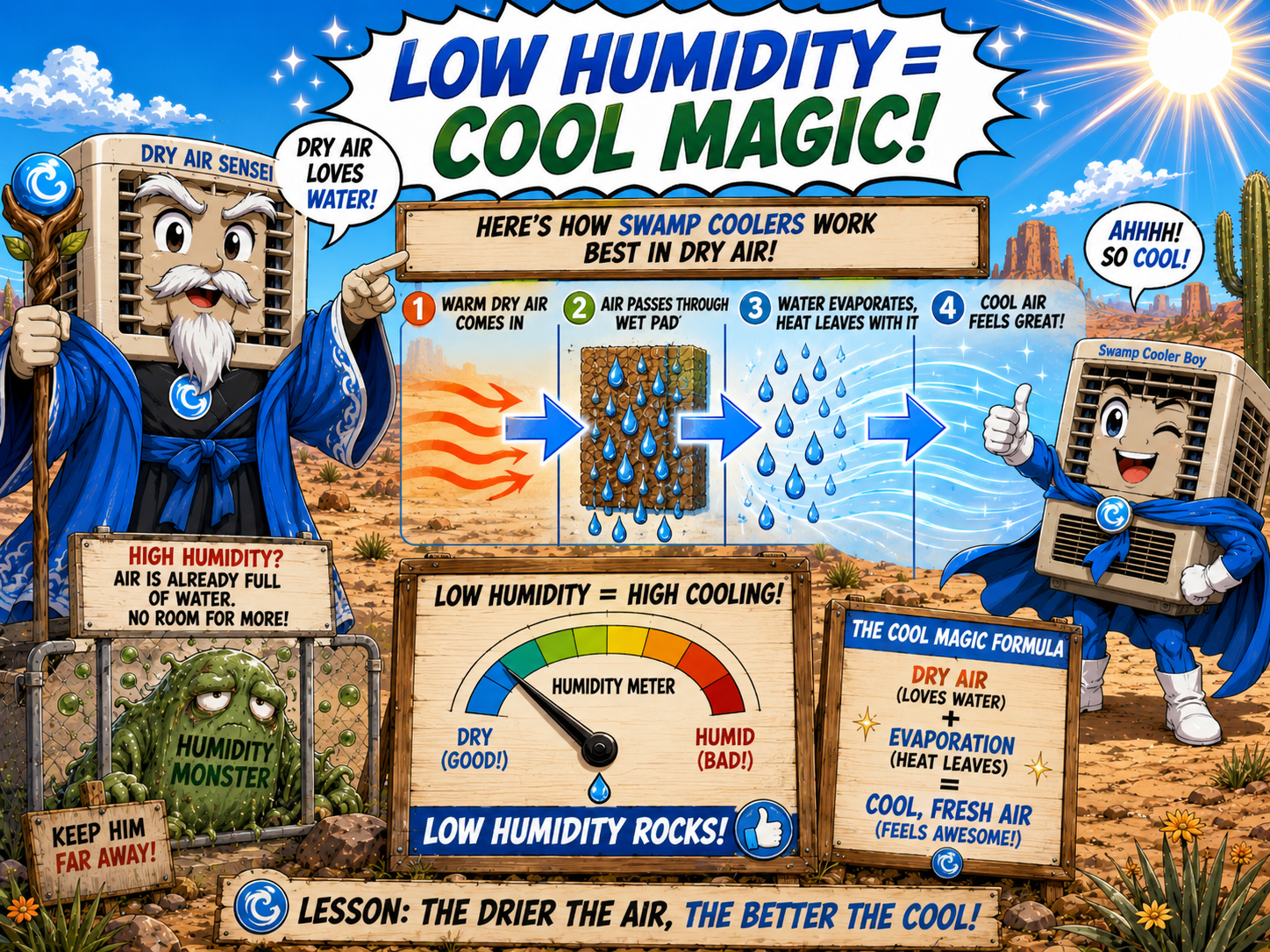
Dry Air Sensei explains low humidity magic for evaporative cooling.

The limit

Solar cannot fix humid air.

Solar power can help run the equipment, but it cannot change the basic climate rule. If the air is too humid, more solar power does not magically make evaporation effective.

That is why Solar Fan Kid still listens to Dry Air Sensei. First ask whether the air is dry enough. Then ask how to power the fan and pump.

  • Solar power helps run the equipment.
  • Low humidity helps the equipment cool effectively.
  • High humidity still reduces evaporative cooling performance.
  • The right system must match the local climate.

Good match

Sunny dry afternoons

The sun is strong, the air is dry, the house is hot, and the cooler needs power. That is the clean Solar Fan Kid storyline.

Dry heat Strong sun

Design question

Direct, grid-tied, or battery-backed?

The site can explain the concept, but actual design depends on equipment, electrical code, controls, storage goals, and homeowner expectations.

Code matters Controls matter

Bad assumption

“Solar makes it work anywhere.”

No. Solar can power a fan, but it cannot turn Florida humidity into Arizona dry air.

Humidity still wins Climate first

Solar design story

The practical conversation starts with the load.

A real solar design conversation asks what is being powered, when it runs, how many hours it runs, and whether the homeowner expects battery backup or daytime-only support.

For a swamp cooler, that means knowing the fan, pump, controls, water system, seasonal use, and whether the cooler is part of a larger home solar plan.

  • Identify the cooler fan and pump loads.
  • Estimate operating hours during hot dry conditions.
  • Decide whether the goal is offset, backup, or dedicated operation.
  • Size and wire the system safely under applicable codes and manufacturer rules.
Solar Fan Kid demonstrates sun powered airflow.

Homeowner lesson

Solar is the power story. Dry air is the cooling story.

The winning formula is not “add solar and everything works.” The winning formula is: dry climate, good equipment, proper airflow, clean maintenance, safe electrical design, and solar power that fits the load.

Part What it does Manga character Homeowner takeaway
Solar panels Produce electricity during sunny hours. Solar Fan Kid Great match for daytime cooling loads when designed correctly.
Fan Pulls outside air through the wet pad and into the home. Swamp Cooler Boy Airflow is the comfort engine.
Pump Moves water so the pad stays wet. The Water Pad MVP Water flow and pad condition matter.
Climate Determines whether evaporation can work well. Dry Air Sensei Check humidity before falling in love with the idea.
Humidity Can reduce cooling performance when too high. Humidity Monster Solar cannot defeat sticky air physics.

SolarSwampCooler.com is educational and comedic. It is not HVAC, electrical, or solar engineering advice. Solar-powered cooling systems should be designed, wired, installed, and maintained according to manufacturer instructions, local codes, utility requirements, and licensed professional guidance where required.

The final punchline

Sun powers the breeze. Dry air makes the breeze useful.

Solar Fan Kid can bring the power. Swamp Cooler Boy can bring the airflow. Dry Air Sensei still decides whether the climate is right.