The name is backwards on purpose

Desert vs Swamp

Swamp Cooler Boy is a desert hero with a swampy name. In dry country, evaporation works. In sticky swamp air, Humidity Monster steals the whole show.

The big contrast

Same machine. Different air. Totally different result.

Evaporative cooling does not judge a house by its zip code alone. It judges the air. Dry desert air gives the system room to evaporate water and make cooler fresh air. Swampy humid air is already loaded with moisture, so the cooling trick weakens.

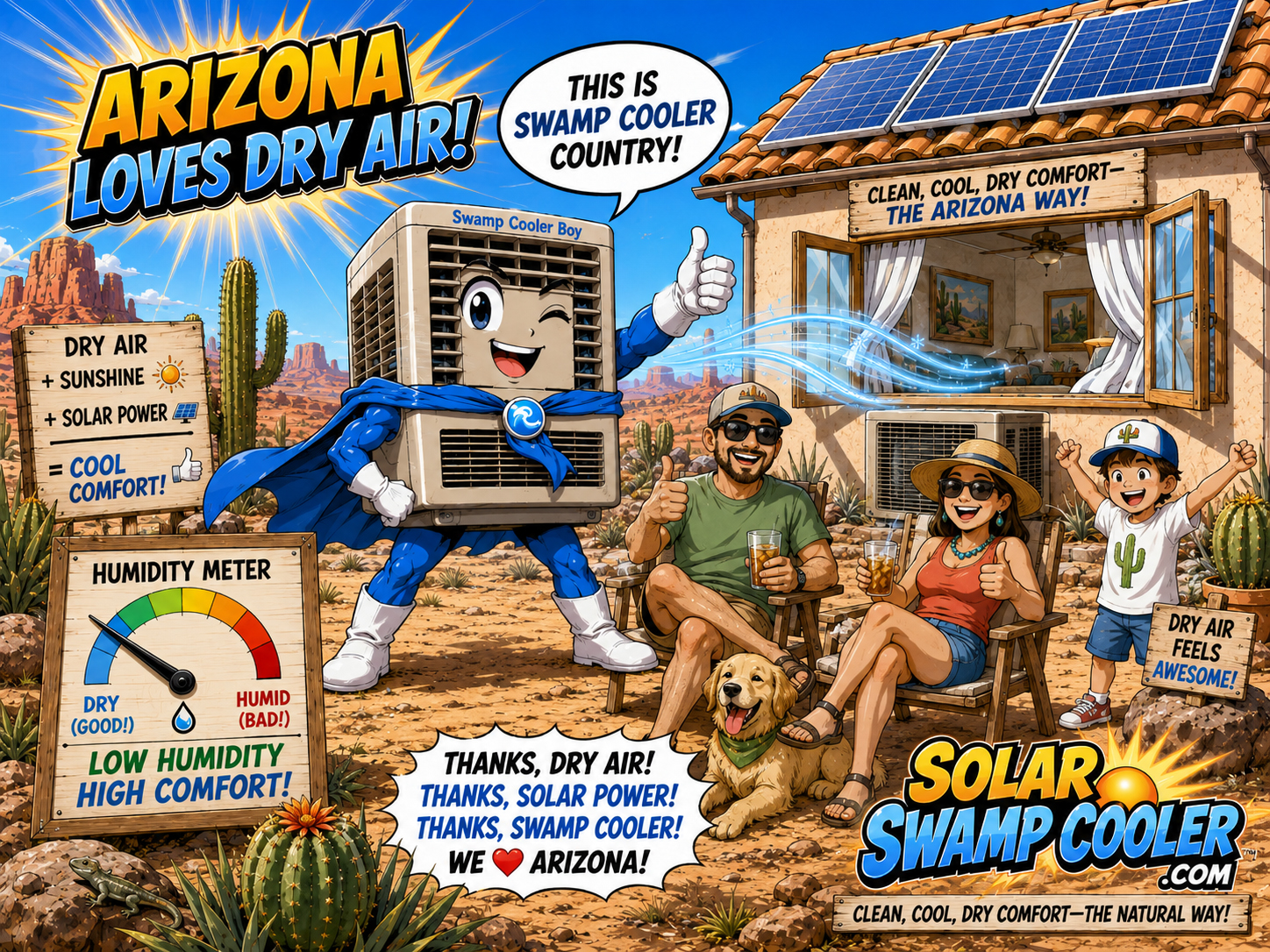
Arizona dry air success with swamp cooler, solar panels, and happy homeowners.

Desert

Dry air gives Swamp Cooler Boy his superpower.

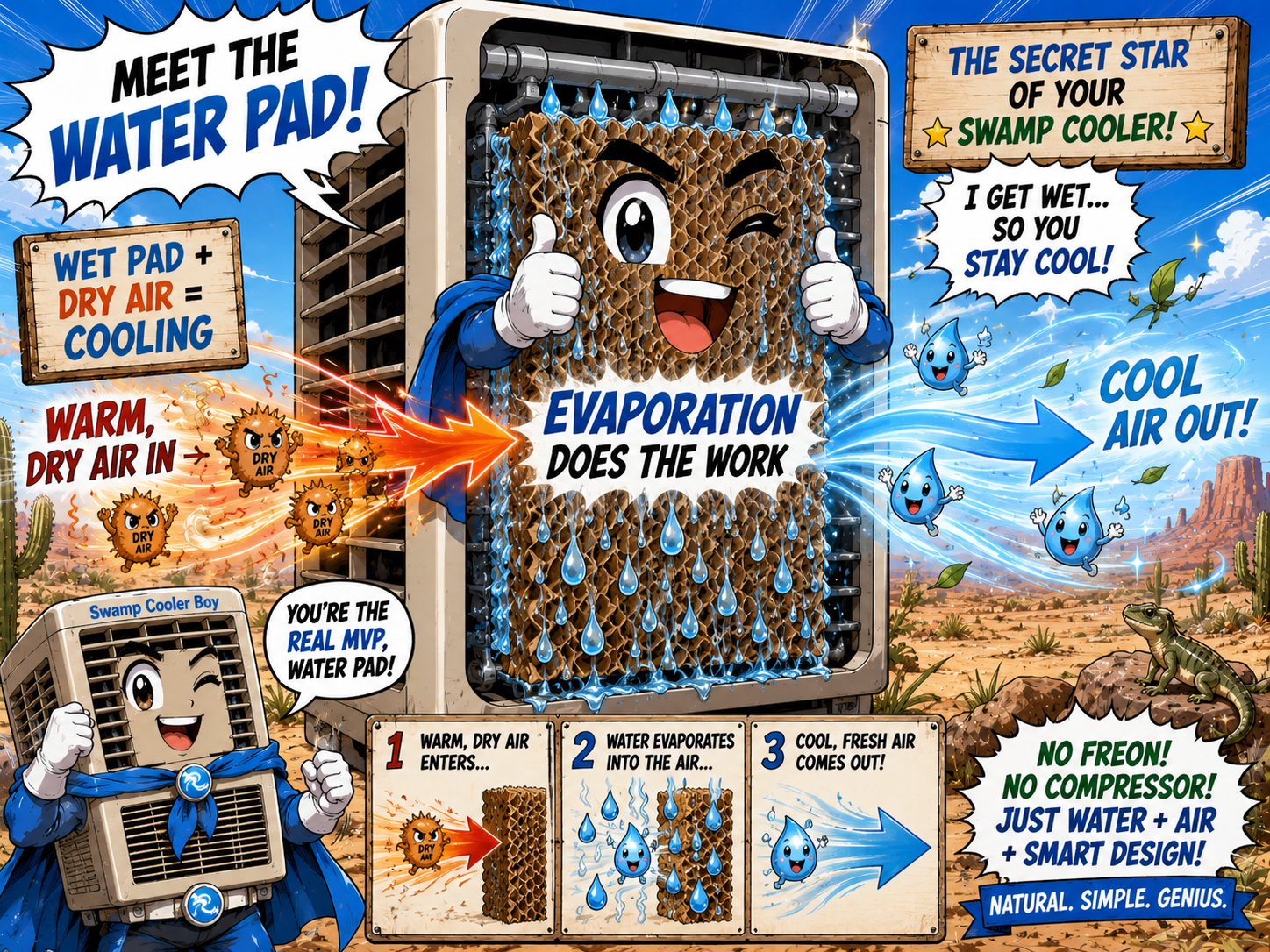
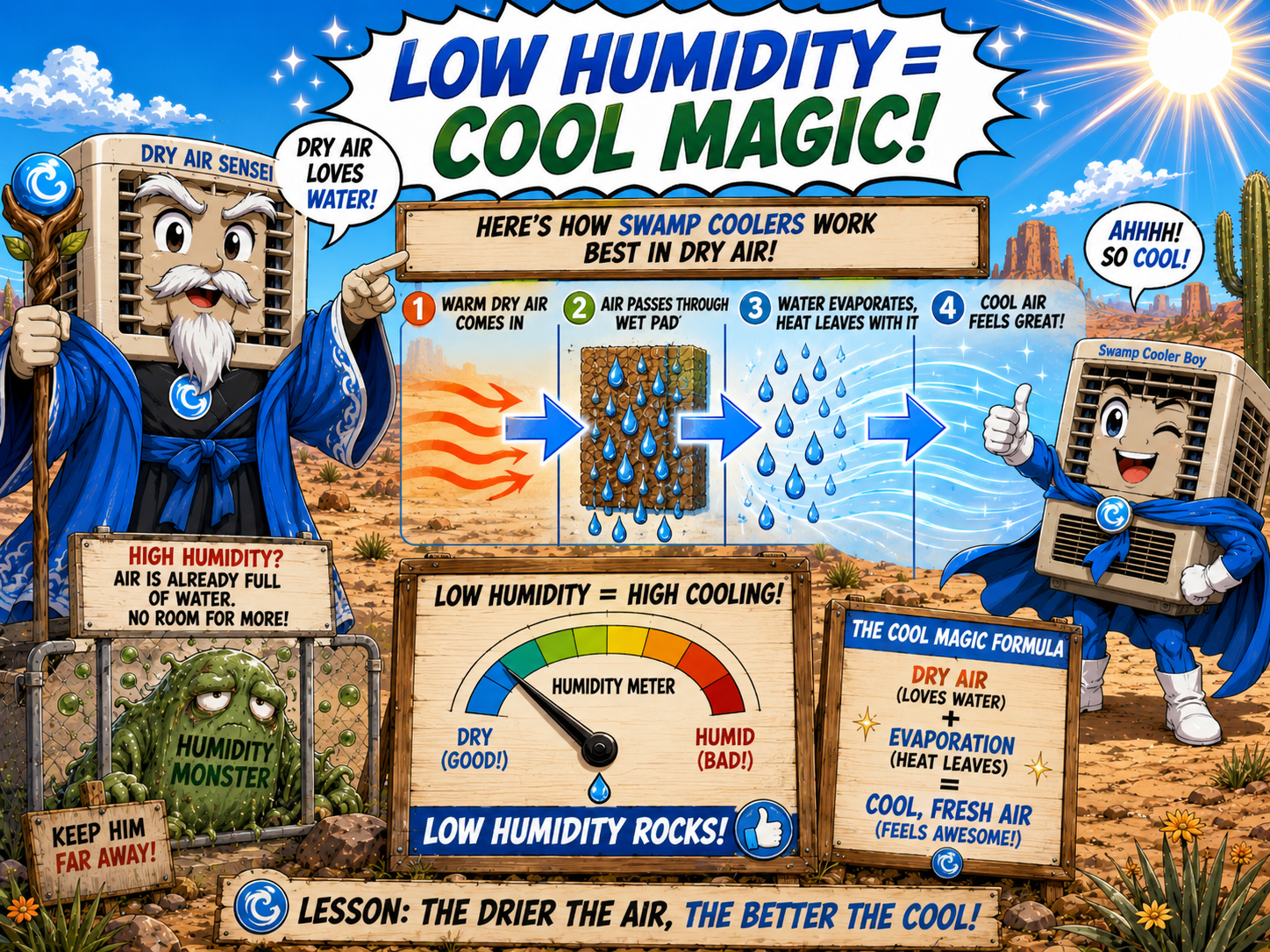
Hot dry air is thirsty. When it passes through a wet pad, water evaporates and carries heat away. The result can be fresh, cooler airflow when the system is properly sized, ventilated, and maintained.

Low humidity Evaporation works Fresh airflow
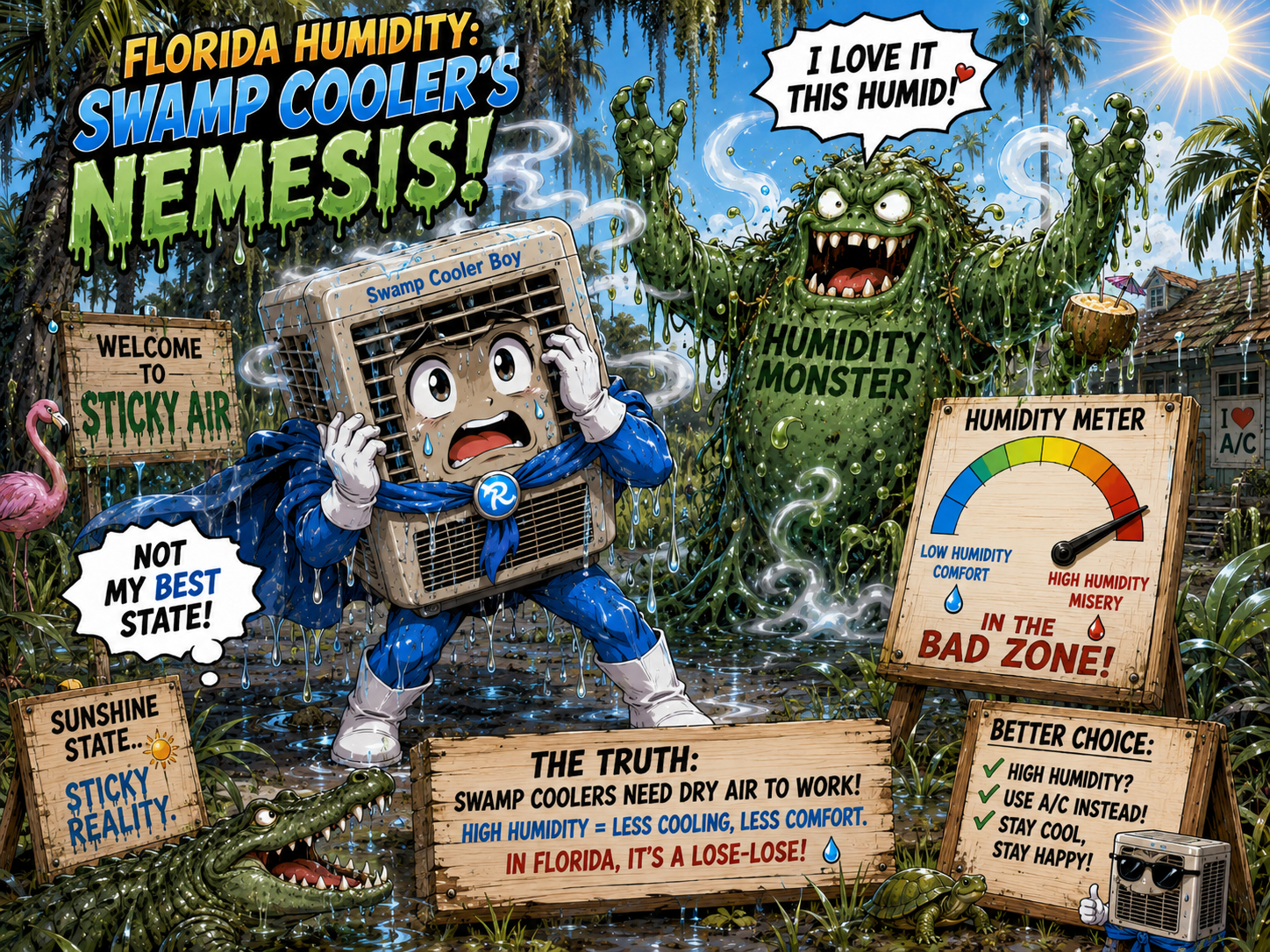
Florida humidity comedy scene where Humidity Monster defeats Swamp Cooler Boy.

Swamp

Humid air gives Humidity Monster the advantage.

Sticky air is already wet. There is less room for more moisture to evaporate, so the cooling effect drops. In humid climates, evaporative cooling can feel disappointing or even make indoor comfort worse.

High humidity Weak evaporation Sticky comfort

Desert lesson

The desert gives the cooler empty space in the air.

Dry air can absorb water vapor. That is why a swamp cooler can make sense in Arizona, New Mexico, Nevada, Utah, inland deserts, high desert areas, and other dry interior climates.

The equipment is simple in concept: outside air, water, a wet pad, a fan, open airflow through the home, and a climate dry enough to make evaporation useful.

  • Low humidity allows stronger evaporation.
  • Open windows let fresh cooled air move through the house.
  • Solar production often lines up with hot sunny cooling hours.
  • Maintenance keeps pads, pans, and water flow from becoming a problem.
Dry Air Sensei explains why low humidity makes swamp coolers work.
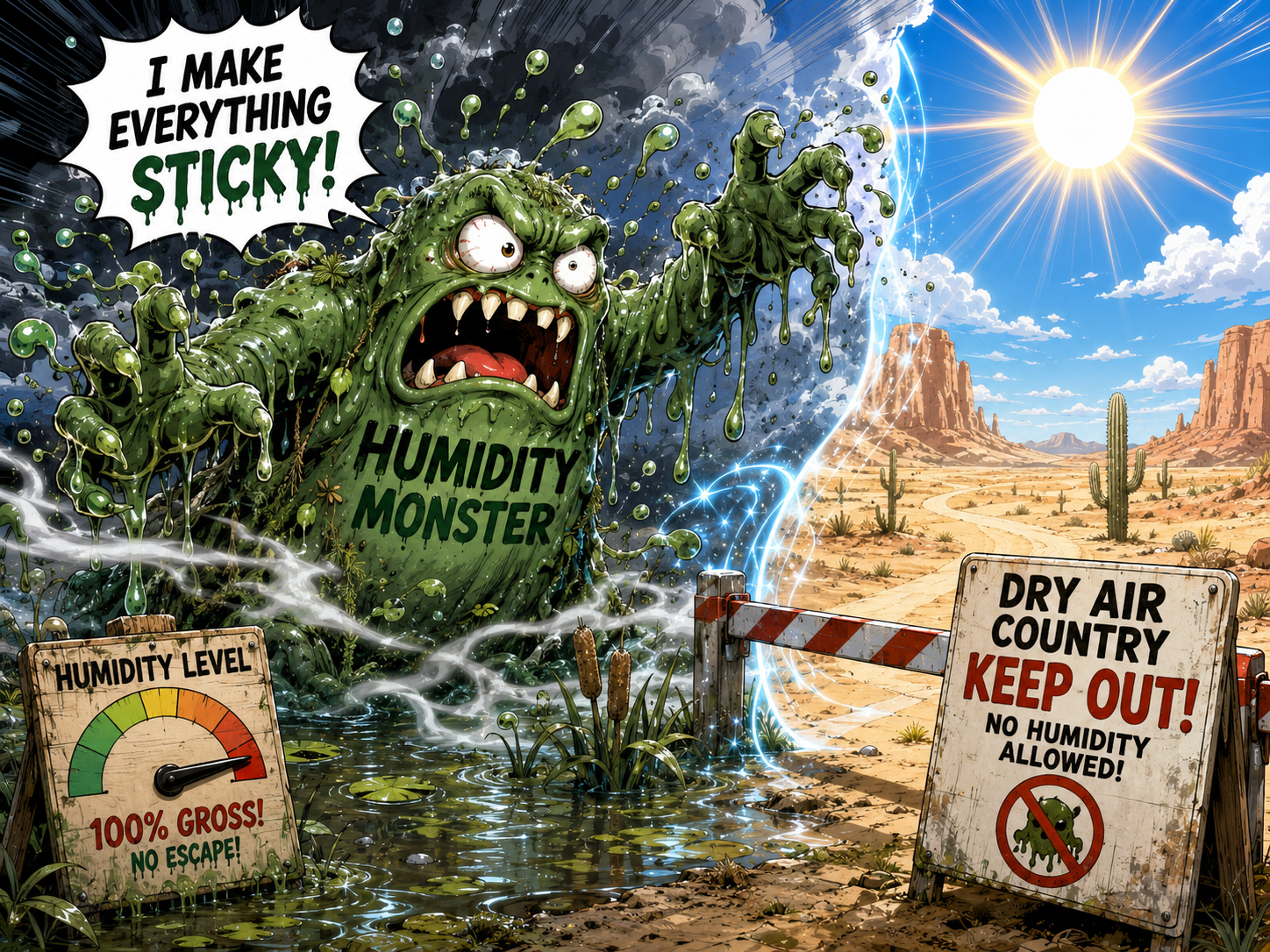
Humidity Monster character representing sticky wet air.

Swamp lesson

The swamp has already filled the air with water.

Humid air is the wrong opponent for evaporative cooling. If the air is already carrying too much moisture, the water pad cannot evaporate enough water to deliver strong cooling.

That is why the machine has the funniest name in HVAC. The swamp cooler does not want to live in a swamp. It wants dry air, open airflow, and a homeowner who knows the climate before expecting miracles.

  • High humidity reduces evaporation.
  • Reduced evaporation reduces cooling.
  • Added moisture can make indoor comfort feel sticky.
  • Compressor air conditioning is usually the better tool in humid climates.

Head-to-head

Desert air vs swamp air.

The manga makes the physics easy to remember: the desert gives the cooler a job. The swamp takes the job away.

Question Desert air Swamp air
How much moisture is already in the air? Usually lower. The air can absorb more water vapor. Usually higher. The air may already be moisture-heavy.
How well does evaporation work? Better. Evaporation can carry heat away. Worse. Evaporation slows because the air is already wet.
How does the house need to operate? Open airflow path: cool air in, warmer air out. Open airflow may add sticky air without enough cooling.
Which character wins? Swamp Cooler Boy gives a thumbs-up. Humidity Monster orders a victory smoothie.
Practical takeaway Evaporative cooling may be a strong fit when properly designed. Refrigerated AC is usually the better comfort tool.
Cutaway house showing cool air in and warm air out through open windows.

Desert operation

Open windows are not a bug. They are the system.

In dry climates, a swamp cooler pushes fresh air through the home. A window or vent path lets the air leave. That movement is part of the comfort strategy.

See Ventilation
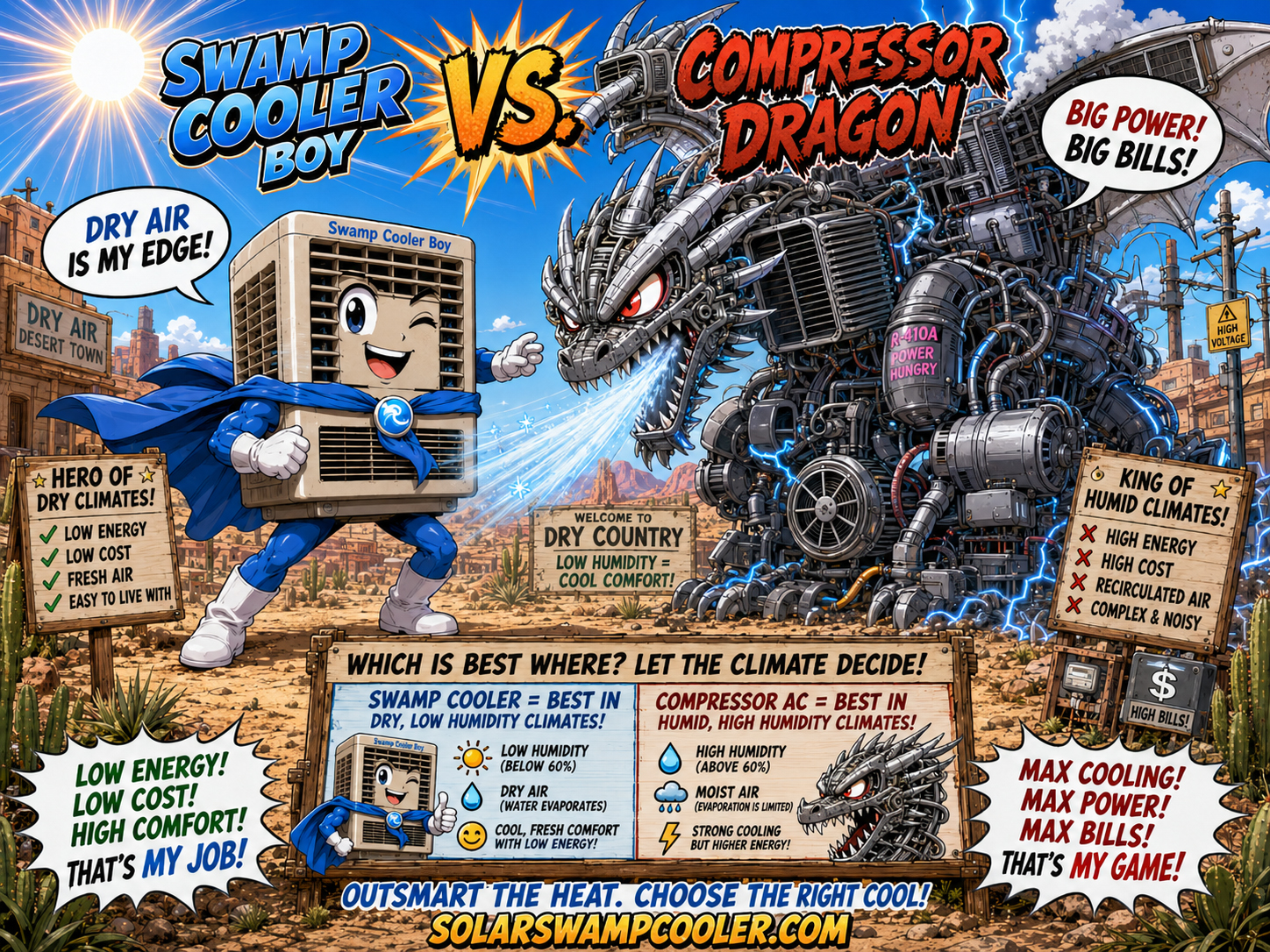
Compressor Dragon versus Swamp Cooler Boy comic comparison.

Swamp operation

Sometimes Compressor Dragon is the right monster.

In humid regions, compressor AC can remove heat and manage moisture. It uses more complex equipment, but it is often the proper tool when the air is sticky.

Compare Cooler vs AC

Desert says

“I have dry air.”

Dry air is the raw material. Without it, the water pad cannot perform the main cooling trick.

Water pad says

“Give me airflow.”

The pad needs air moving through it and water flowing properly across it.

Swamp says

“I already did that.”

Humid air has already absorbed moisture, so the evaporative cooling opportunity is much smaller.

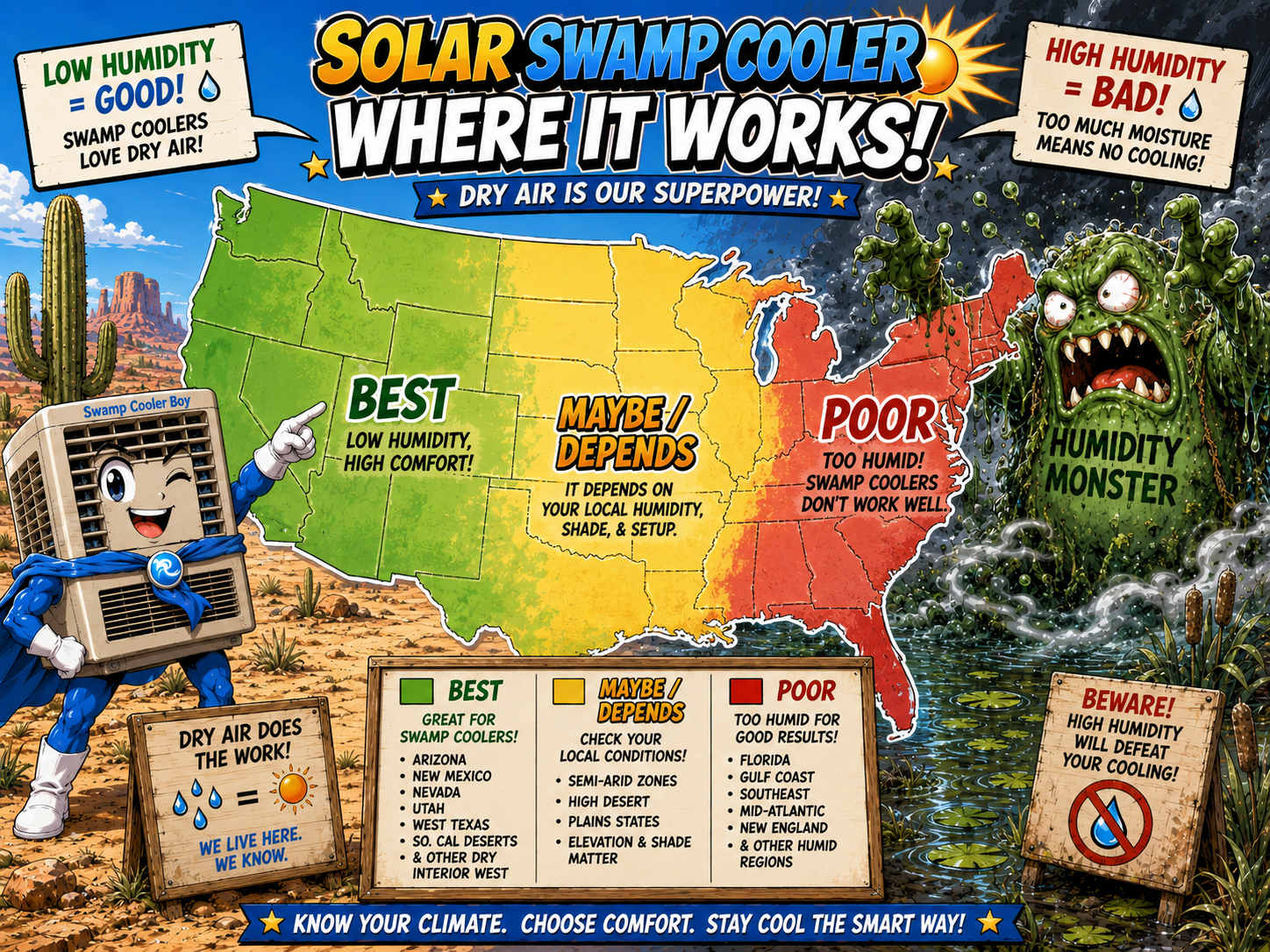
Comic map showing where swamp coolers work best and where they work poorly.

Map memory

The West is not always perfect, and the East is not always impossible — but humidity decides.

The map is a guide, not a substitute for local weather data. Some high desert areas are excellent. Some transitional regions are seasonal. Some coastal or humid areas are poor fits.

The honest message is stronger than the sales pitch: check the actual humidity, not just the promise of “cheap cooling.”

The punchline

A swamp cooler belongs in dry country.

Desert air makes the machine useful. Swamp air makes the name funny. That is why SolarSwampCooler.com tells the story with manga: one picture can teach what a bad sales pitch forgets.

This page is educational and comedic. Actual cooling performance depends on local weather, equipment sizing, ventilation, water quality, building design, installation quality, maintenance, and homeowner comfort goals.