Episode 5

Solar Fan Kid

The fan and pump meet solar panels and realize daytime cooling matches daytime sunshine. Solar Fan Kid explains the cleanest logic in the desert: when the sun is hot, the panels are awake.

The sunny introduction

The fan and pump finally meet the panels.

After Desert Grandma’s porch lesson, Swamp Cooler Boy understands dry air, open windows, clean pads, and real-world use. But one question remains: who powers the breeze?

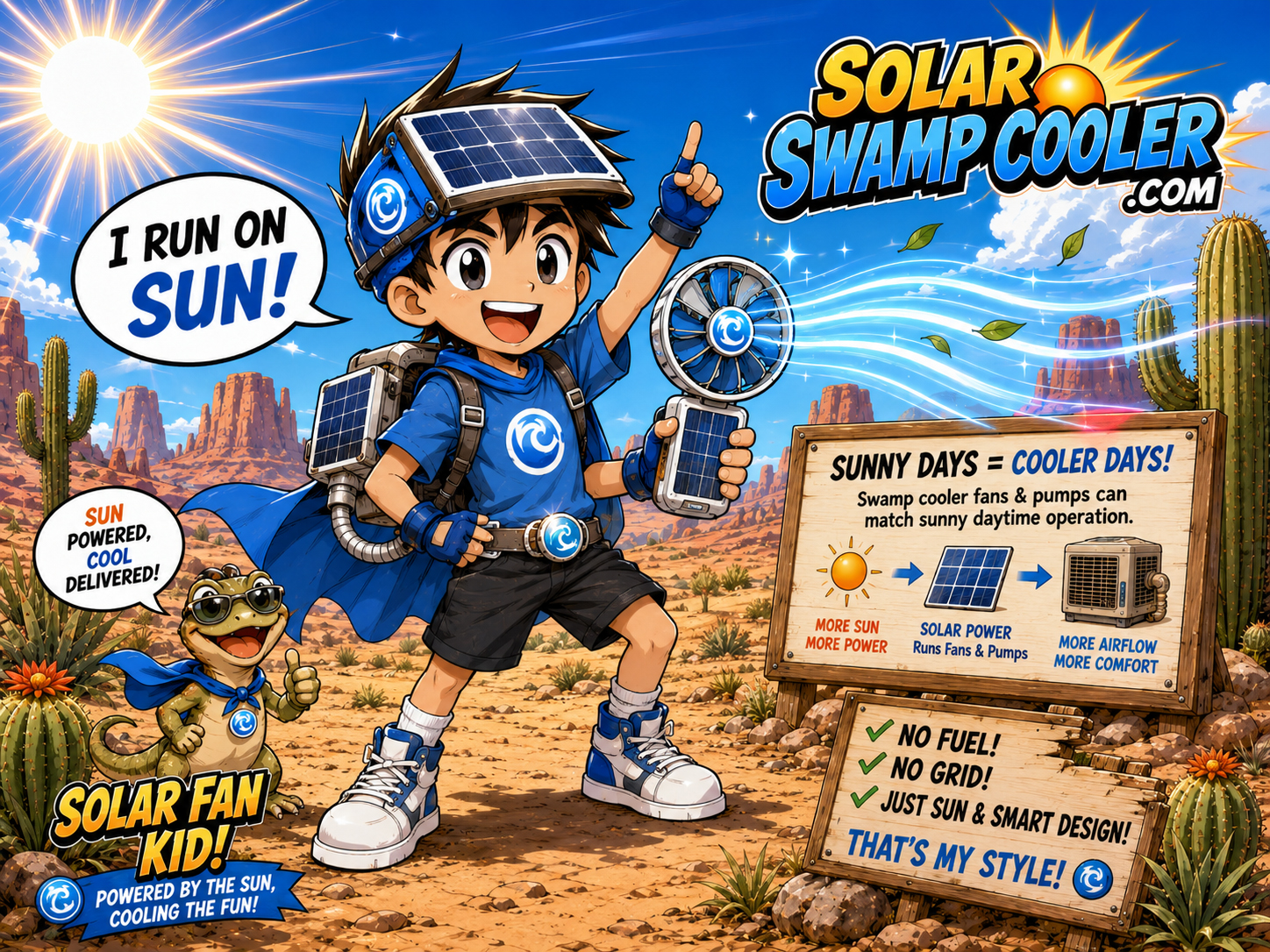
At high noon, Solar Fan Kid leaps from the roof with a solar-panel backpack, points at the blazing sun, and announces:

“I run on sun. And today, the sun is doing overtime.”

Solar Fan Kid introduces solar power for swamp cooler fans and pumps.

Scene 1

The hottest hour of the day.

The desert sun climbs high. The roof is bright. The house is warm. Swamp Cooler Boy is ready, but the fan and pump look nervous.

Fan: “I can move the air, but I need power.”
Pump: “I can wet the pad, but I also need power.”
Solar Fan Kid: “Look up, teammates. The sun is blasting. The panels are working. This is our hour.”
Swamp Cooler Boy: “So when the house needs cooling most, the roof can be making power?”
Solar Fan Kid: “That is the daytime match.”

Scene 2

The power chain appears.

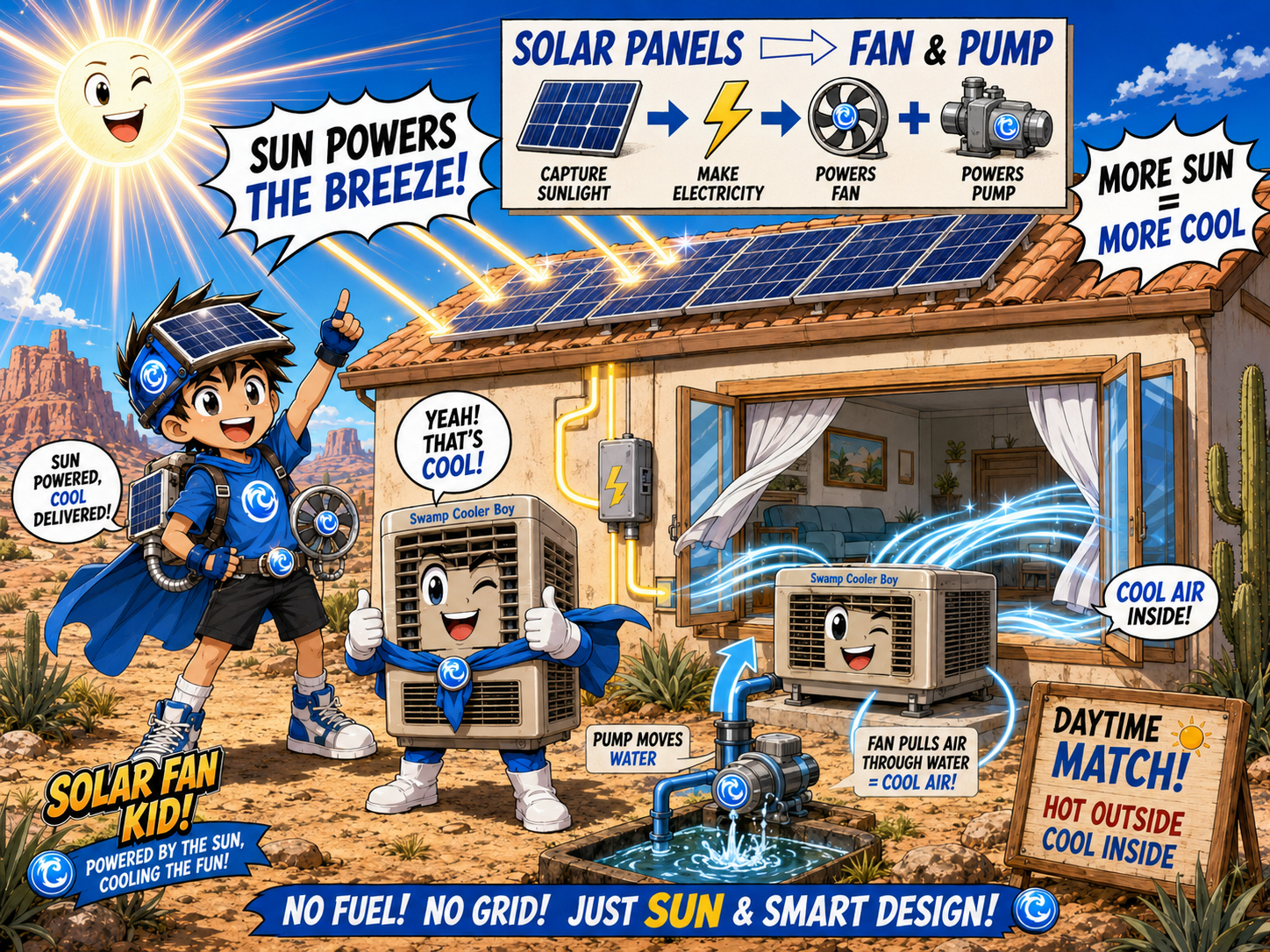
Solar Fan Kid draws a glowing arrow across the roof: sun → panels → electricity → fan and pump → wet pad → cool airflow.

Solar Fan Kid: “Panels capture sunlight. Electricity runs the fan and pump. The pump wets the pad. The fan moves air.”
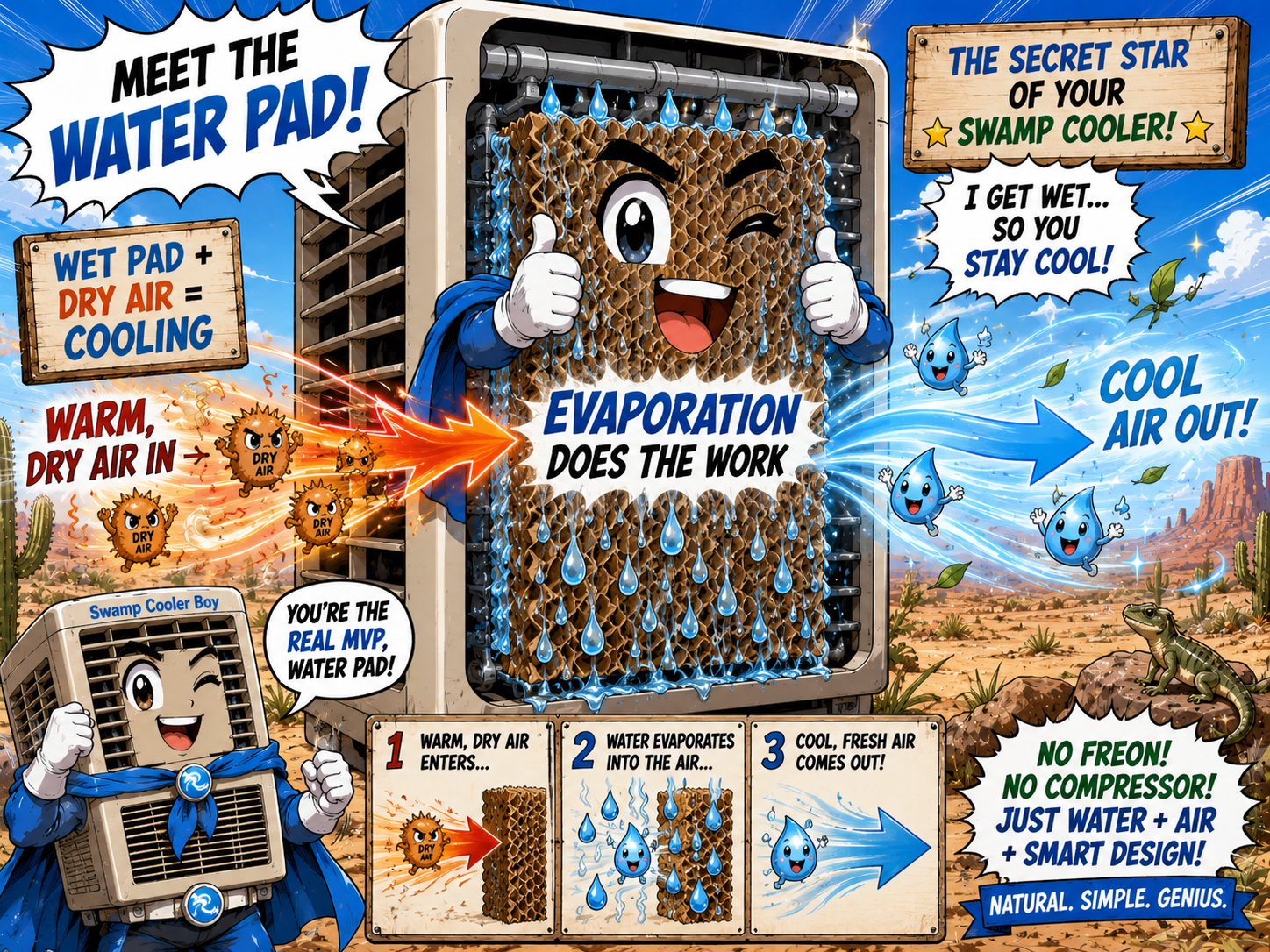
The Water Pad: “And I do the evaporation work when the air is dry enough.”
Dry Air Sensei: “Correct. Solar powers equipment. Low humidity powers the cooling opportunity.”
Swamp Cooler Boy: “So nobody gets to skip the climate lesson.”

Scene 3

The team starts cooling.

The panels sparkle. The fan spins. The pump moves water. The pad gets wet evenly. Dry air enters, evaporation happens, and cool fresh air starts moving through the house.

Fan: “Airflow is moving.”
Pump: “Water is flowing.”
Solar Fan Kid: “Sun power delivered.”
Desert Grandma: “And the windows are cracked right. See? The house breathes.”
Swamp Cooler Boy: “Cool air in. Warm air out. Sun on the roof. Dry air in the pad. I love this job.”

Scene 4

Solar Fan Kid gives the warning.

Everyone cheers, but Solar Fan Kid raises one finger. The lesson is not over. Solar power is helpful, but it is not a climate eraser.

Solar Fan Kid: “Solar can help power the fan and pump. But solar cannot make humid air dry.”
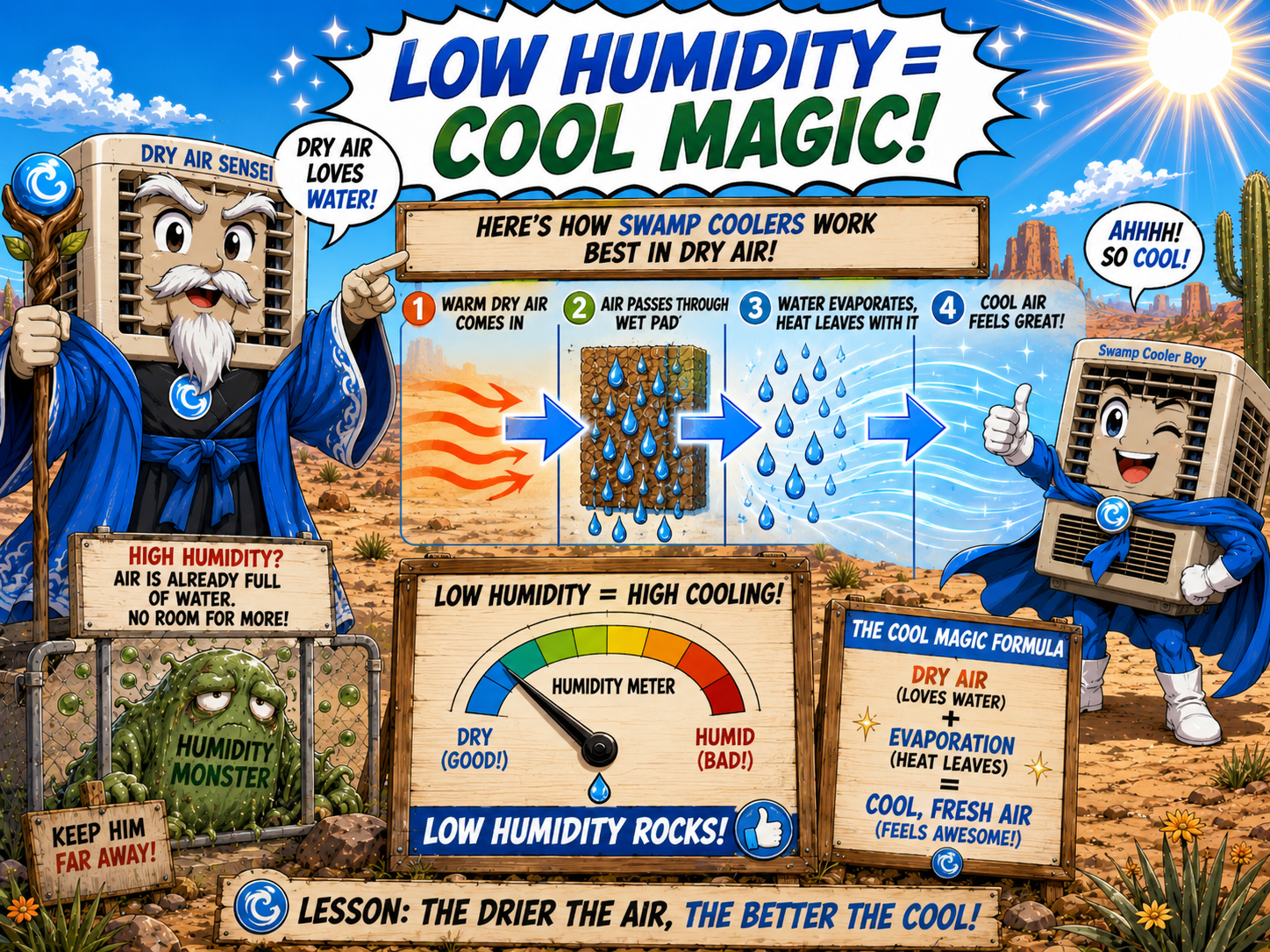
Dry Air Sensei: “Good. You have learned the balance.”
Swamp Cooler Boy: “So the winning formula is sun, dry air, water, airflow, and maintenance.”
Desert Grandma: “And common sense. Don’t forget common sense.”
Solar panels powering swamp cooler fan and pump in a desert home.

Episode lesson

Solar power can match daytime cooling demand.

In a dry sunny climate, cooling demand often rises when solar production is strong. That makes the fan-and-pump story easy to visualize.

  • Panels produce during sunny hours.
  • The fan moves air through the wet pad.
  • The pump keeps the pad wet.
  • Dry air determines whether evaporation cools well.
Dry Air Sensei explaining low humidity magic for evaporative cooling.

Boundary lesson

Solar does not defeat humidity.

More power can spin the fan and run the pump, but it cannot change the basic physics of evaporation. Humid air still weakens the swamp cooler’s performance.

  • Climate comes before equipment enthusiasm.
  • High humidity still reduces evaporation.
  • Solar helps the power story, not the humidity story.

Solar Fan Kid’s four-part formula

Sun powers the equipment. Dry air powers the cooling opportunity.

Episode 5 separates the solar story from the cooling story so homeowners do not confuse them. Solar helps run the system. Dry air helps the system work.

Sunlight hits panels

Bright daytime hours can produce useful solar power.

Power runs loads

The fan and pump are the core electrical players in the swamp cooler story.

Water meets dry air

The wet pad needs low-humidity air to create effective evaporation.

Airflow moves comfort

Open windows or vents let cool fresh air move through the home.

Window ventilation explainer showing cool air in and warm air out.

The airflow reminder

Solar power still needs a breathing house.

Solar can power the breeze, but the house still needs to let the breeze travel. A swamp cooler is not sealed-window AC. It is fresh-air movement.

That is why Solar Fan Kid works with Desert Grandma. The panels may make power, but Grandma knows which window to crack.

Fan power Pump power Open windows Setup matters

Episode 5 punchline

The sun showed up exactly when the cooler needed help.

Solar Fan Kid teaches the happy part: sunny dry afternoons can be a great match for fan-and-pump operation. Dry Air Sensei teaches the limit: the air must still be dry enough.

This episode is educational and comedic. It is not HVAC, electrical, solar, plumbing, health, or building-design advice. Solar-powered cooling systems should be designed, wired, installed, operated, and maintained according to manufacturer instructions, local codes, utility requirements, water quality conditions, and licensed professional guidance where required.