Meet the secret star of the system

Water Pad Closeup Comedy

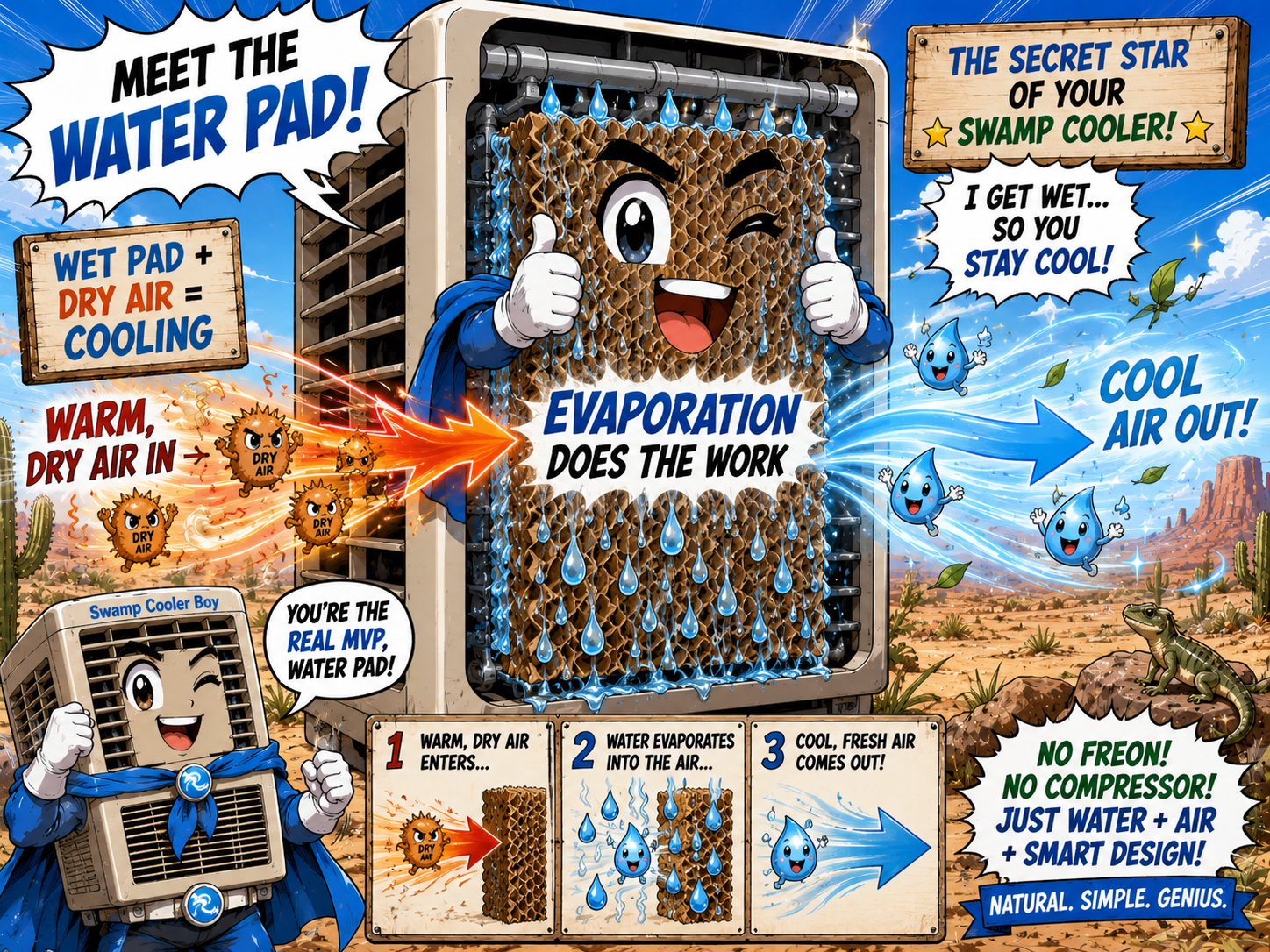
The water pad is where the swamp cooler story actually happens. Warm dry air enters, water evaporates, heat leaves, and cool fresh air exits.

The MVP

The humble pad does the heroic work.

Swamp Cooler Boy gets the cape, Solar Fan Kid gets the sunshine, and Dry Air Sensei gets the wisdom. But the water pad is where the cooling trick becomes real.

The pad creates a wet surface for air to pass through. When hot dry air moves across that wet surface, water can evaporate into the air stream. That evaporation uses heat, so the air leaving the pad is cooler.

  • Warm dry air enters the cooler.
  • Water wets the pad surface.
  • Some water evaporates into the dry air.
  • Evaporation carries heat away from the air stream.
  • Cooler fresh air moves into the home.
Close-up comedy explainer of a swamp cooler water pad showing warm dry air in, evaporation, and cool air out.

The closeup lesson

Wet pad + dry air = cooling opportunity.

The pad is not just a filter. It is the evaporation stage. If the pad is clean, wet evenly, and surrounded by low-humidity airflow, it can do its job.

Dry air arrives

Low-humidity air has room to absorb more water vapor.

Water coats the pad

The pump distributes water so the pad surface is ready for evaporation.

Evaporation happens

Water changes into vapor and takes heat from the moving air.

Cool air exits

The fan sends cooler fresh air through the home.

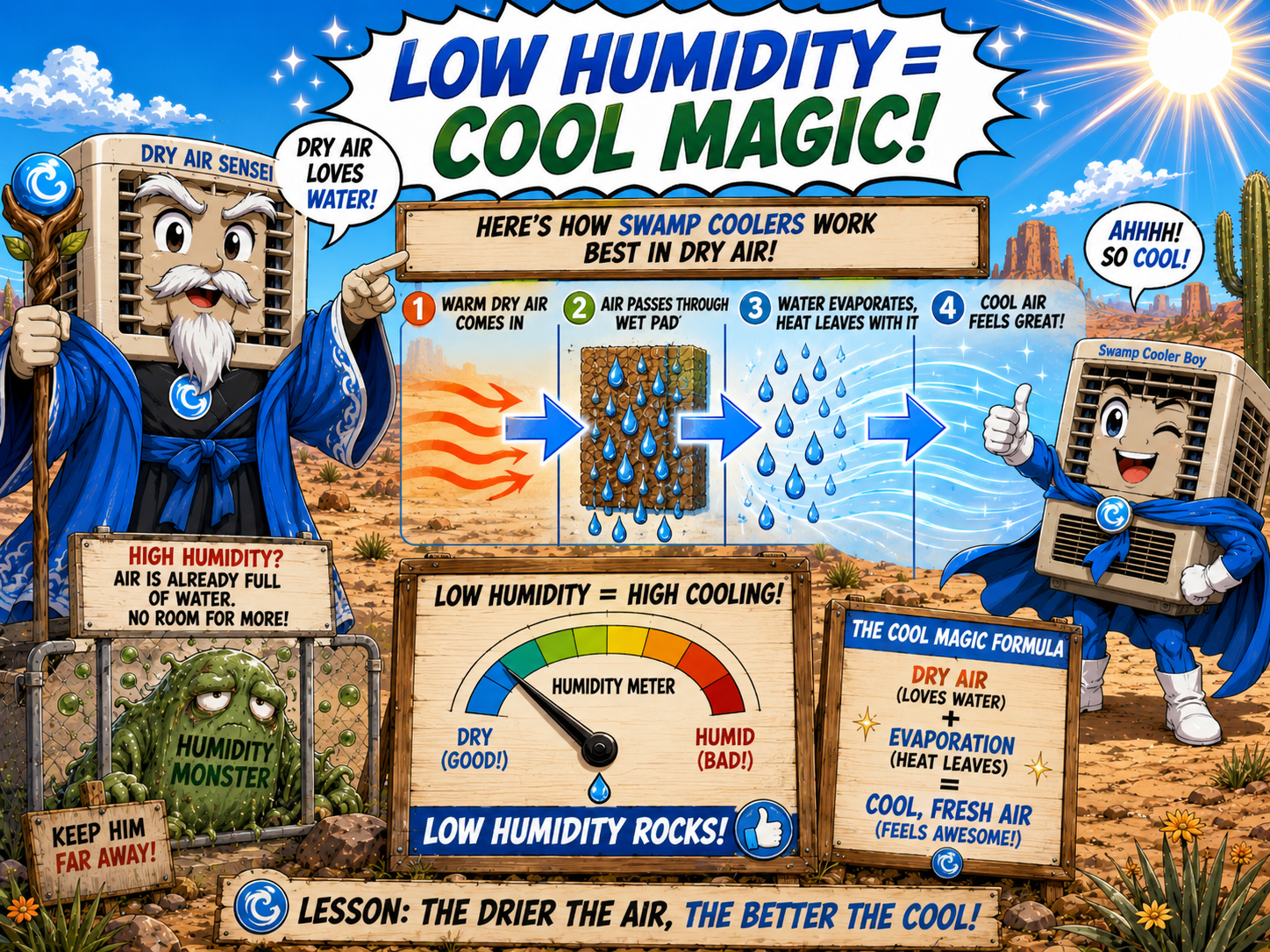
Dry Air Sensei explains why low humidity makes evaporative cooling work.

Dry-air partner

The pad needs air that can accept moisture.

Dry air is “thirsty.” It can absorb more water vapor, so evaporation can happen more effectively. Without low humidity, the pad has less cooling opportunity.

Dry air Evaporation Cool airflow
Low Humidity Magic
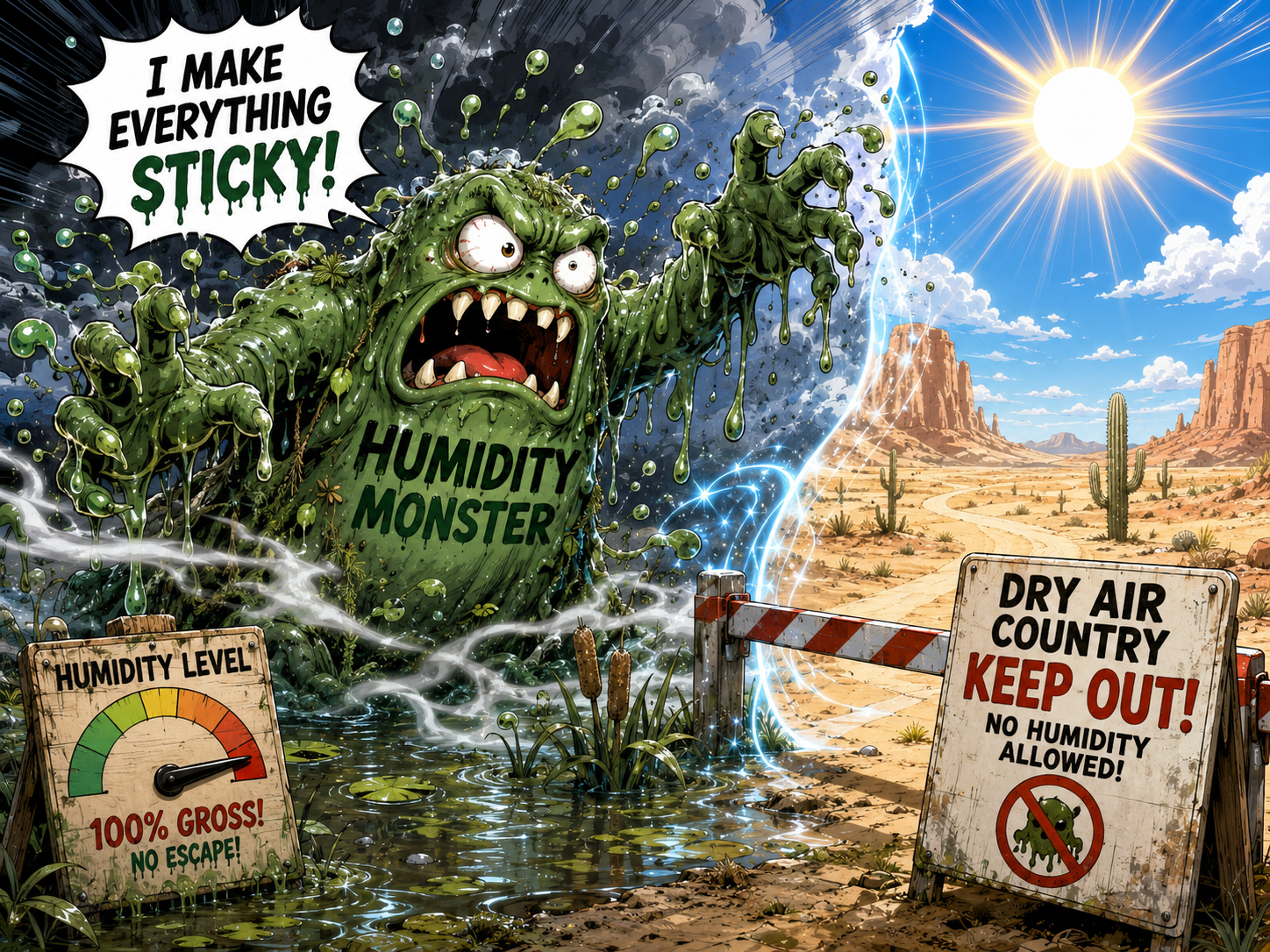
Humidity Monster represents sticky air that reduces evaporation.

Humidity warning

The pad cannot win if the air is already wet.

In humid air, evaporation slows because the air is already carrying moisture. The pad can still get wet, but the cooling effect may be weak.

High humidity Weak evaporation Sticky air
Humidity Warning
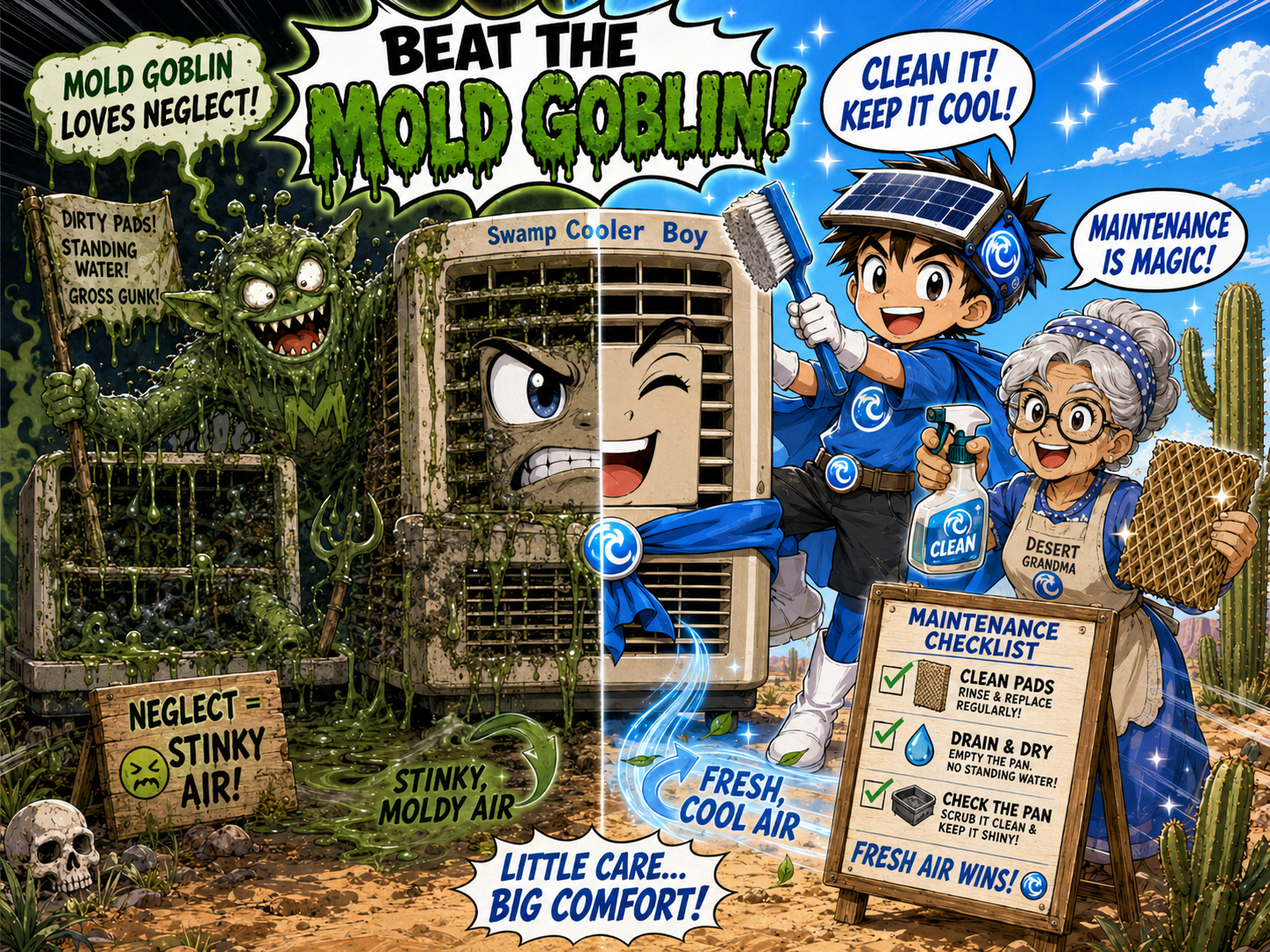
Mold Goblin maintenance warning for swamp cooler pads, pans, and water flow.

Pad maintenance

A dirty pad turns the MVP into a benchwarmer.

The water pad is a working part. It can clog, scale, dry unevenly, wear out, smell bad, or become a home for Mold Goblin if the water path is neglected.

Clean pads, even water distribution, clear airflow, and proper replacement are part of the real-world cooling story. The pad cannot save the day if it looks like a desert fossil soaked in soup.

  • Inspect pads for mineral buildup, clogging, damage, and age.
  • Confirm water is reaching the pad evenly.
  • Replace pads according to manufacturer guidance.
  • Keep the pan, pump, and water path clean.

Good pad

Wet evenly.

A pad that is evenly wetted gives air more surface area for evaporation.

Even water Good flow

Bad pad

Clogged or crusty.

Mineral buildup, dust, and age can reduce airflow and cooling performance.

Scale Clogging

Wrong air

Too humid.

Even a perfect pad struggles if the outside air is already full of moisture.

Humidity Monster Weak cooling

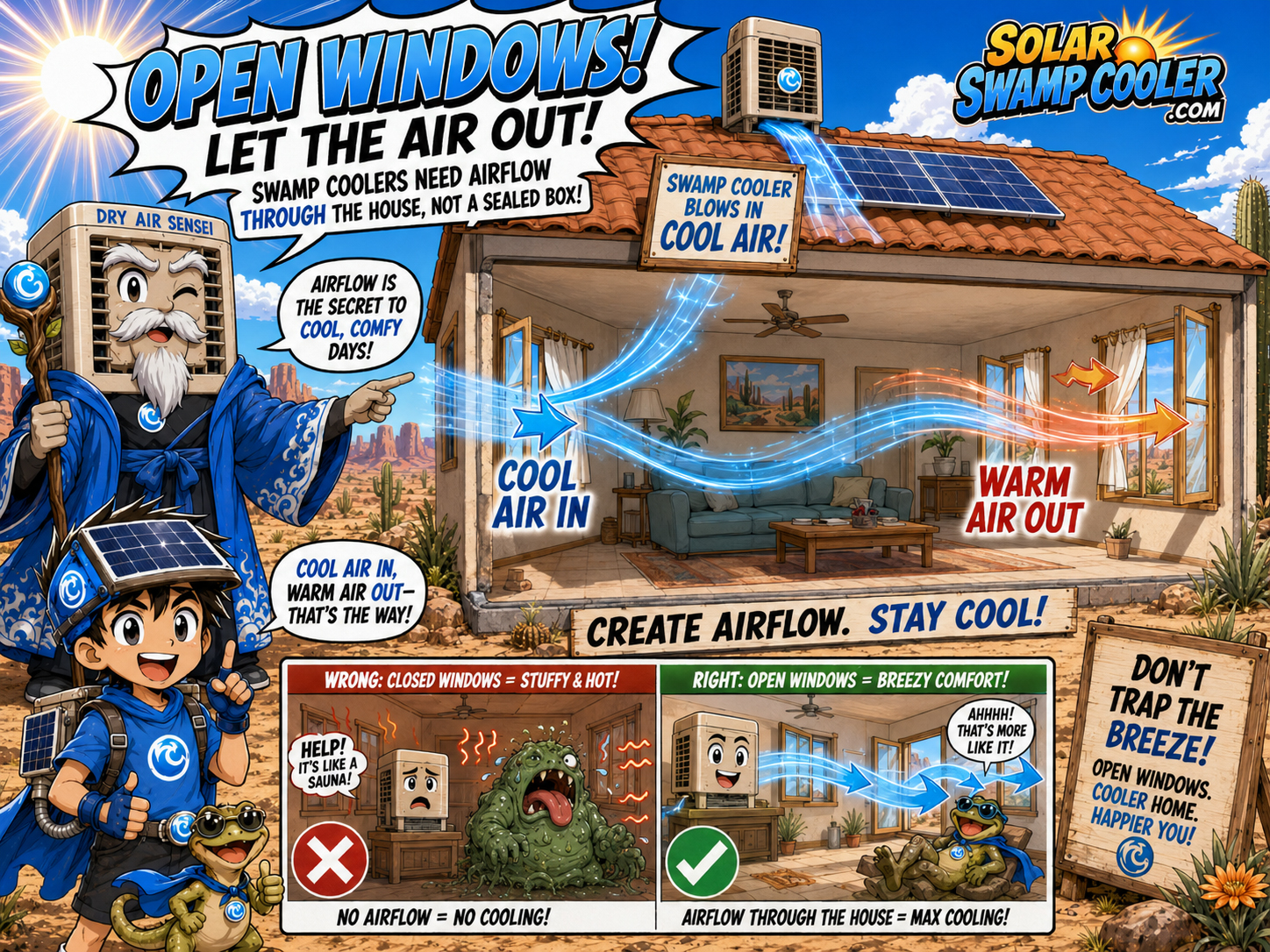
Airflow partner

The pad needs moving air, not trapped air.

The fan pulls air through the pad, but the home also needs a path for that air to move. A swamp cooler is not sealed-window AC. It is a fresh-air system.

Desert Grandma’s rule applies here too: cool air in, warm air out. Do not trap the breeze.

  • The fan moves air across the wet pad.
  • The home needs open windows or vents for exit airflow.
  • Correct airflow helps distribute cooling through the home.
  • Closed-window operation can make the system feel wrong.
Cutaway home showing cool air entering and warm air leaving through open windows.

Water Pad MVP table

What the pad needs to be heroic.

The pad is simple, but it is not optional. The whole evaporative cooling process depends on it being wet, clean, and matched with dry moving air.

Pad requirement What it means If ignored Manga translation
Dry incoming air Low-humidity air can absorb water vapor. Cooling effect drops in humid air. Dry Air Sensei helps; Humidity Monster hurts.
Even water flow The pad surface should be properly wetted. Dry spots reduce evaporation. The Water Pad loses its MVP cape.
Clear airflow Air must pass through the pad and the home. Cooling distribution suffers. Swamp Cooler Boy cannot breathe.
Clean condition Pad should not be clogged, scaled, or gross. Performance and odor problems can appear. Mold Goblin moves into the bleachers.
Timely replacement Pads wear out and must be replaced as needed. Old pads weaken the whole system. Even heroes retire.

This page is educational and comedic. It is not HVAC, plumbing, water-quality, mold-remediation, health, or building-design advice. Follow manufacturer instructions, local codes, and licensed professional guidance where required. Disconnect power and follow proper safety procedures before inspecting or servicing equipment.

The pad punchline

The smallest-looking part may carry the biggest lesson.

Swamp Cooler Boy may be the mascot, but the Water Pad is the stage where evaporation performs. Respect the pad, respect the air, and respect the maintenance.