
Tiny breeze or whole house airflow?

Portable vs Whole House

Not every swamp cooler is trying to do the same job. A portable unit is a small-room helper. A whole house evaporative cooler is a building-airflow system. Swamp Cooler Boy says: know the mission before you buy the machine.

The first question

Are you cooling a chair, a room, or a house?

Portable evaporative coolers can be useful for spot cooling in the right dry climate. Whole house swamp coolers are larger systems designed to move outside air through the home and exhaust warmer air through open windows or vents.

The same dry-air rule applies to both. If the air is humid, neither one gets a magic pass. The difference is scale, airflow, water handling, installation, maintenance, and expectation.

  • Portable units are usually for local comfort or small areas.
  • Whole house systems are built around house-wide airflow.
  • Both need dry air to perform well.
  • Both need realistic expectations and maintenance.
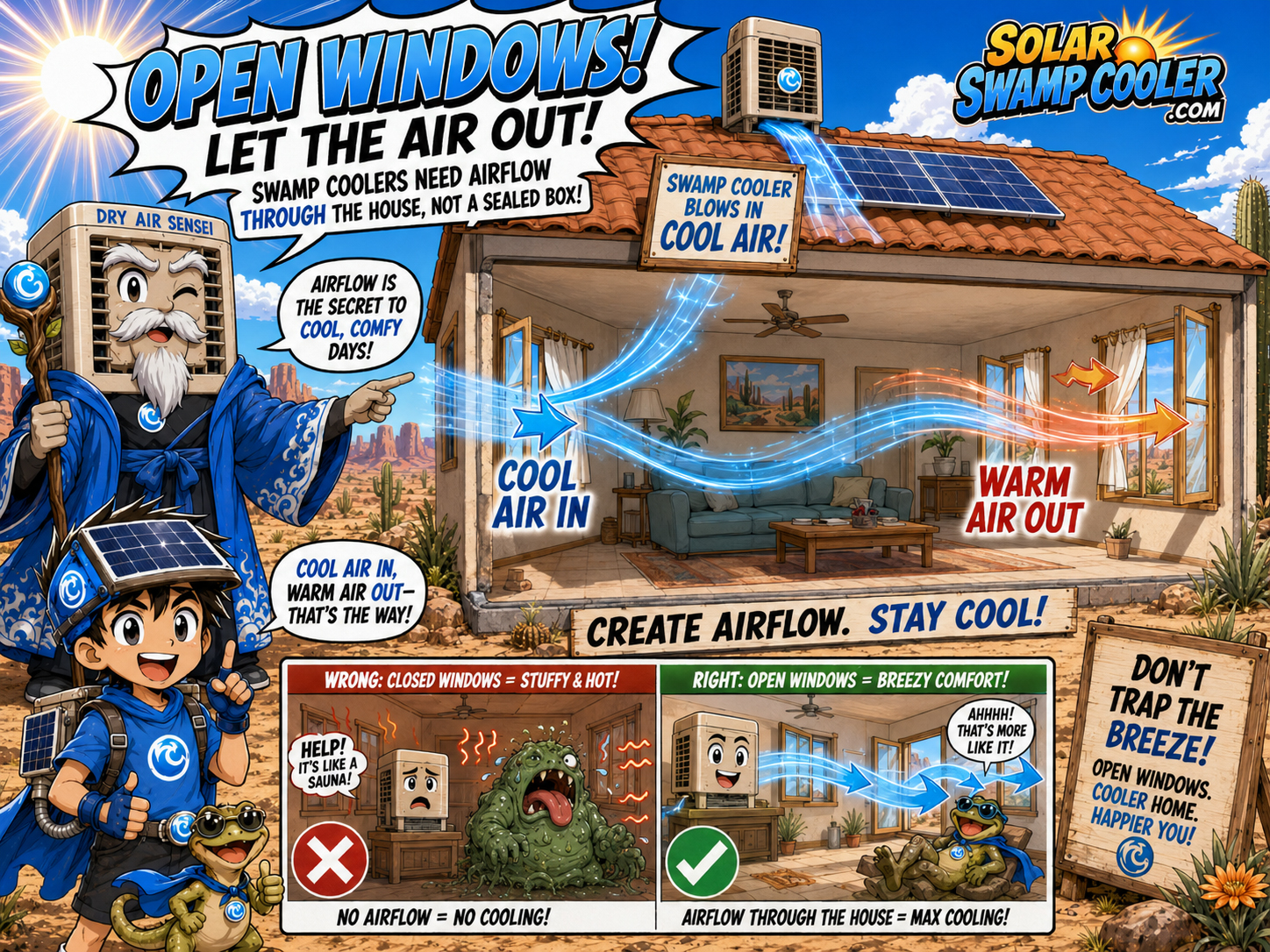
Comic cutaway explaining swamp cooler airflow through a house.
Solar Fan Kid with a small solar powered fan gadget.

Portable

The little breeze buddy.

A portable evaporative cooler is the small character in the manga. It can help a person, patio corner, garage work area, shop space, or small room when the air is dry enough and the unit has airflow.

Spot cooling Small areas Limited reach
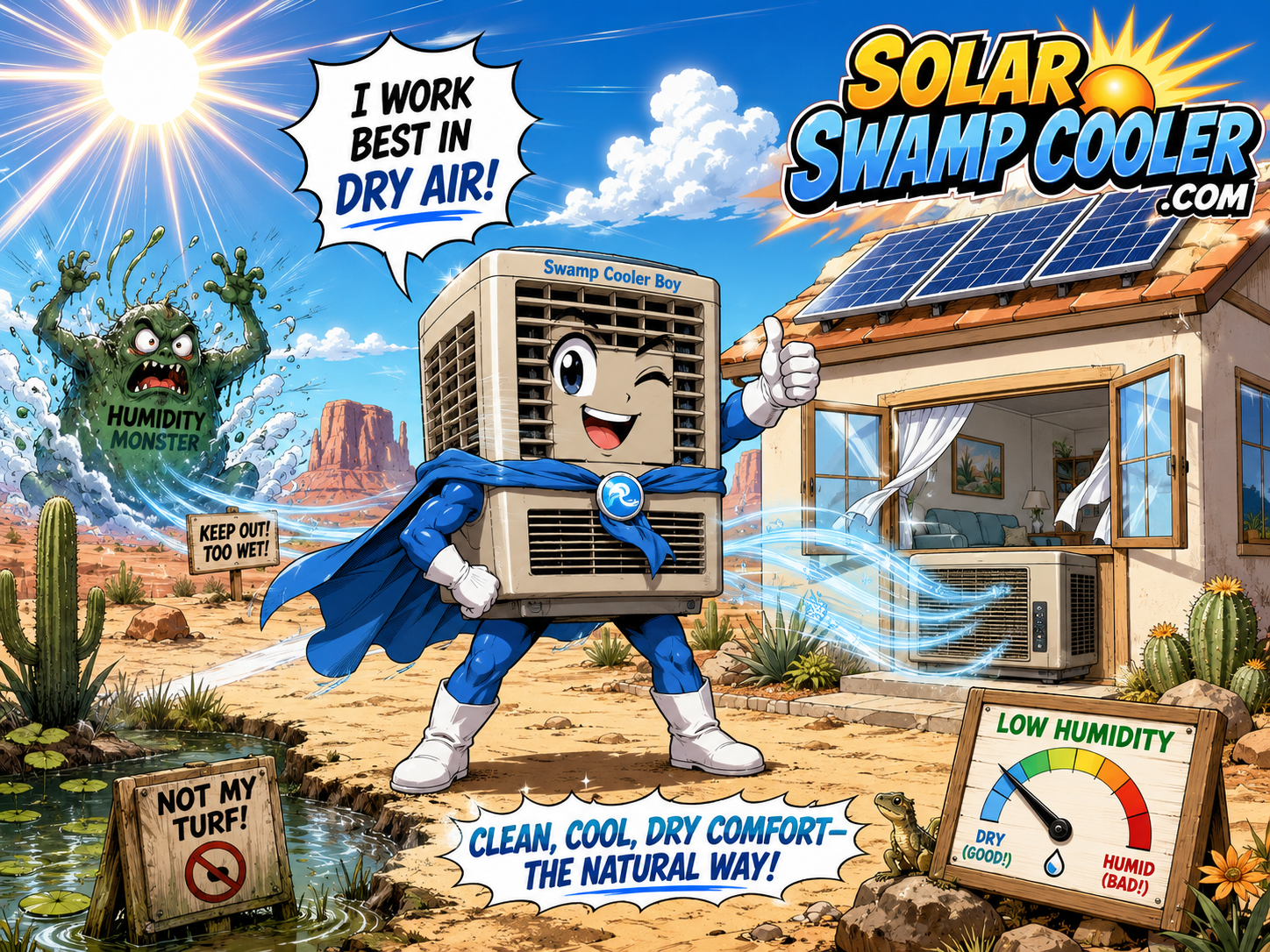
Swamp Cooler Boy cooling a desert home with solar panels.

Whole house

The airflow commander.

A whole house swamp cooler is a bigger system. It is not just a fan in a box. It becomes part of how the home breathes: air comes in, air moves through, and air leaves through the right openings.

House airflow Open windows Design matters

The comparison table

Portable cooler vs whole house system.

Desert Grandma’s rule: do not expect a lunchbox to cool a mansion, and do not install a mansion-sized system to cool one folding chair.

Question Portable swamp cooler Whole house swamp cooler
Best mission Spot cooling, small spaces, temporary use, patios, garages, work areas. Moving fresh cooled air through much of the home in a dry climate.
Airflow style Local airflow near the unit. Performance drops with poor placement. Designed airflow path through the building, often using open windows or vents.
Installation Usually simpler, but still needs water, power, and ventilation awareness. More involved. May require roof, wall, duct, electrical, water, and code coordination.
Solar story Small fans and pumps may be easier to think about as small loads. Can fit into a larger home solar design, but load and controls must be understood.
Expectation risk Expecting a portable unit to behave like central AC. Expecting the house to stay sealed like refrigerated AC.
Humidity limit Still struggles in humid air. Still struggles in humid air.
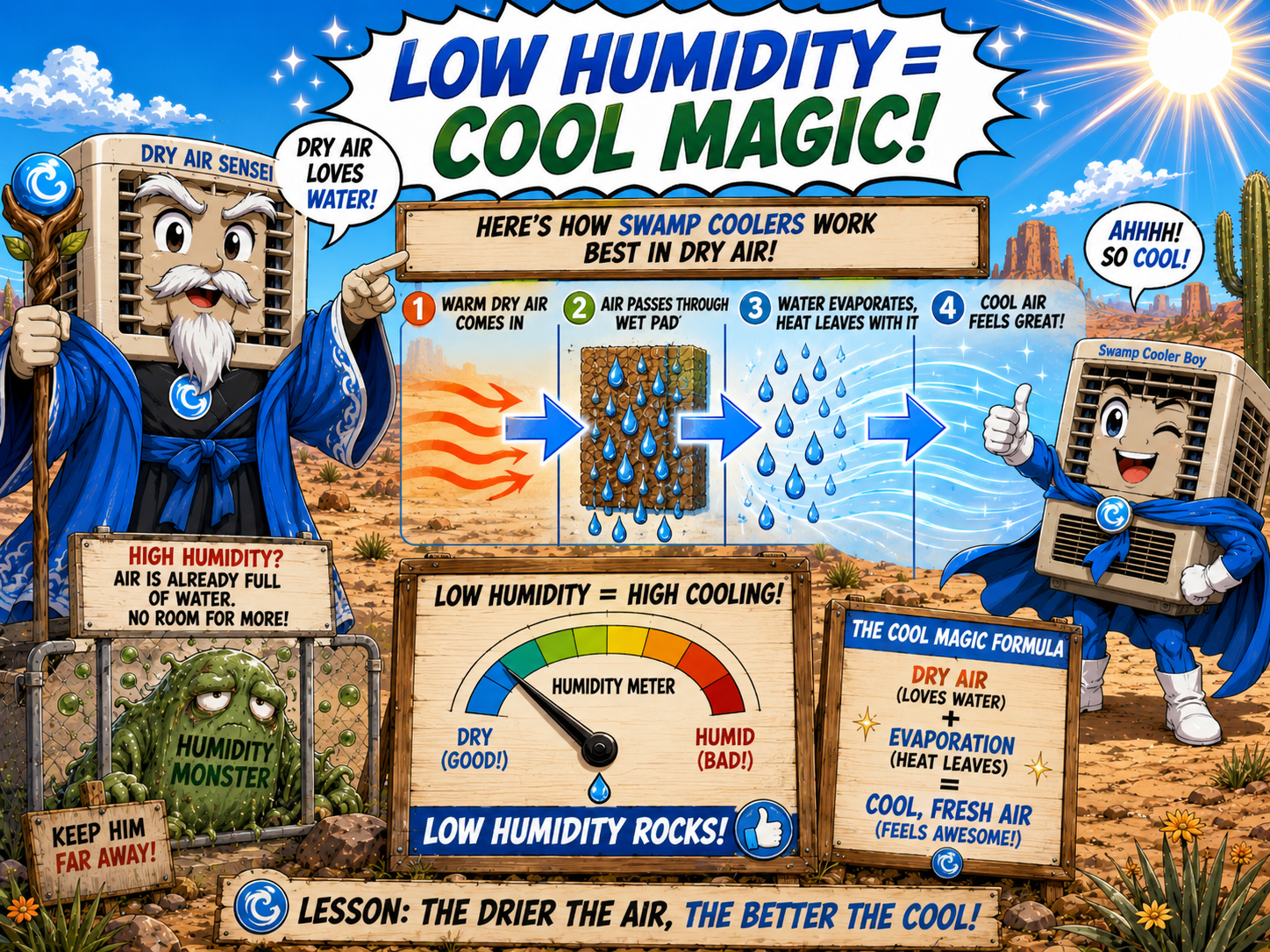
Dry Air Sensei explains the low humidity magic behind evaporative cooling.

Same physics

Both types need dry air.

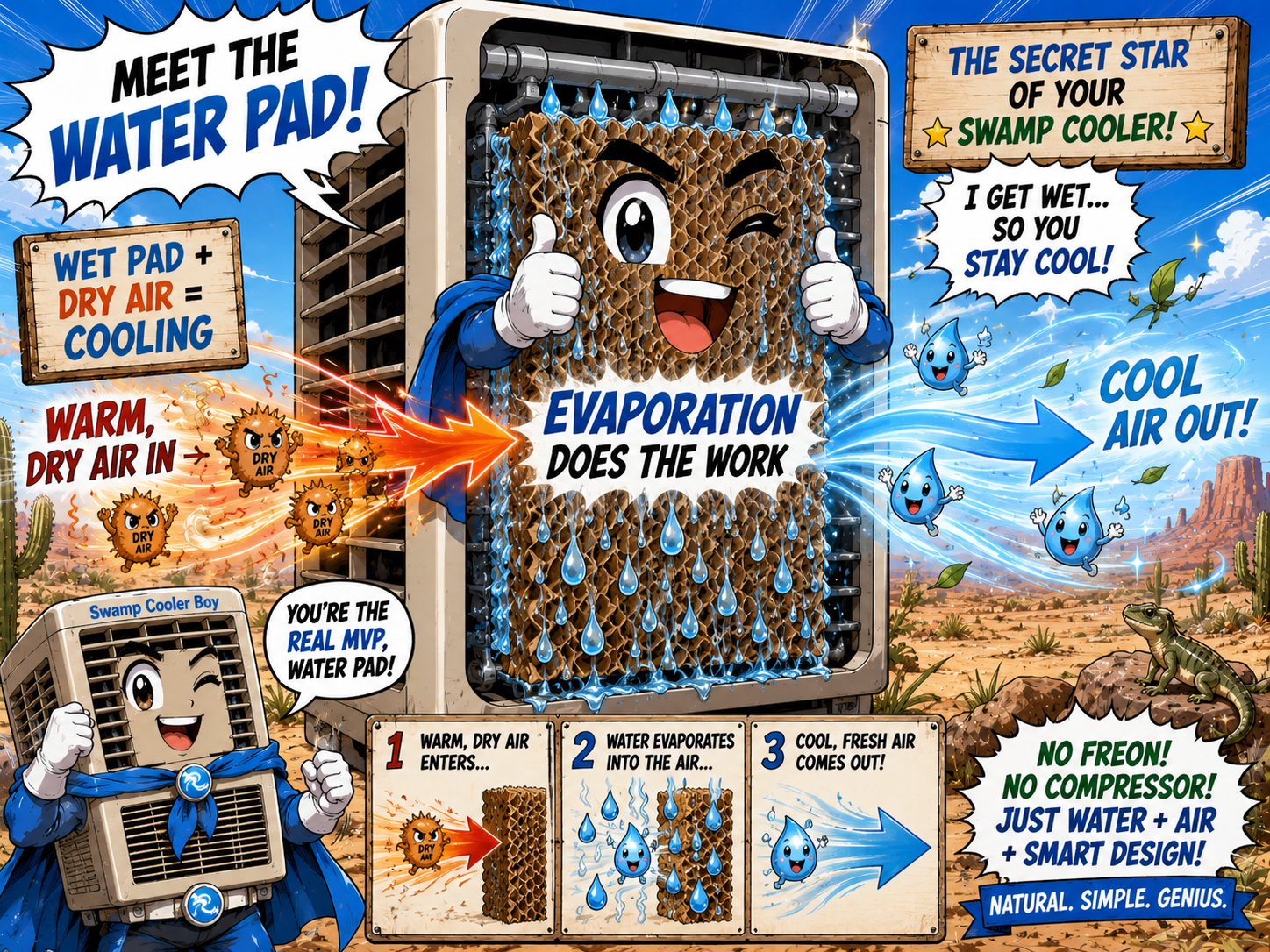
Portable or whole house, the cooler is still relying on evaporation. Dry air gives the water pad room to work. Humid air turns the equipment into a very expensive wet breeze machine.

That is why this site keeps repeating the rule. The equipment choice comes after the climate question, not before it.

Dry air helps Humid air hurts Local weather matters
Close-up comic explainer of the swamp cooler water pad.

Portable lesson

Small does not mean maintenance-free.

A little unit still has water, pads, a reservoir or water feed, airflow, and cleaning needs. If the water gets nasty, Mold Goblin does not care how small the cooler is.

  • Keep the reservoir and pad clean.
  • Use it where air can move.
  • Do not expect whole-room miracles from a tiny unit.
Mold Goblin warning for swamp cooler maintenance.

Whole house lesson

Big systems need real upkeep.

A larger evaporative cooler has more consequence when neglected. Pads, pans, pumps, water lines, airflow, and seasonal shutdown all matter.

  • Inspect pads and water flow.
  • Keep pans clean and drained as needed.
  • Follow manufacturer instructions and local code requirements.

The solar angle

Portable loads are small. Whole house loads are serious.

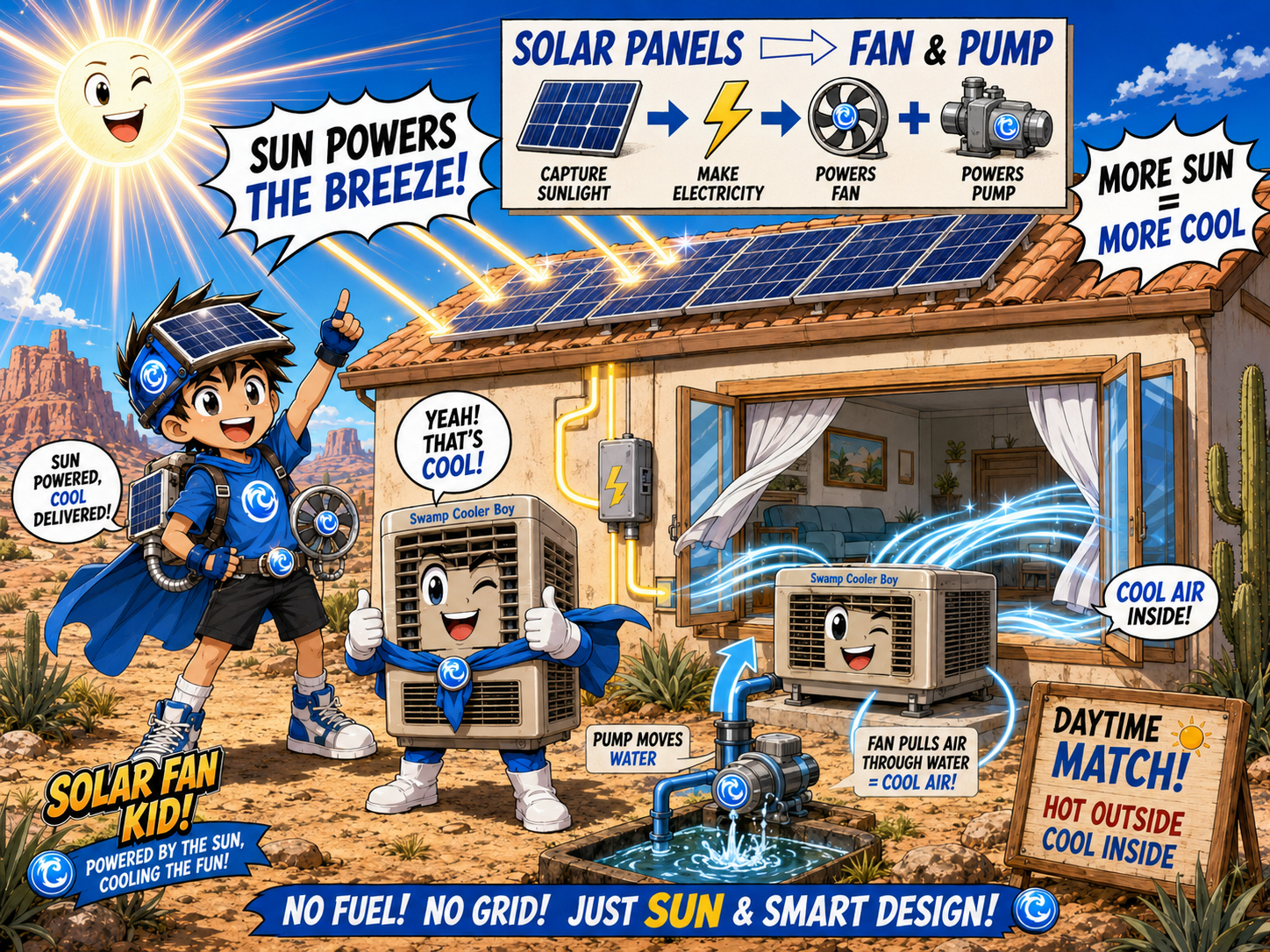
Solar Fan Kid can explain both. A portable cooler may have a small fan and pump. A whole house cooler can still be efficient compared with compressor AC, but it is a real load with real wiring, controls, and operating hours.

The practical question is not “Can solar touch it?” The practical question is: how much power does it use, when does it run, and what do you want solar to accomplish?

  • Identify fan and pump wattage.
  • Estimate daily operating hours.
  • Decide whether the goal is offset, dedicated power, or backup.
  • Design wiring and controls safely.
Solar panels powering swamp cooler fan and pump in a sunny desert home.

Common mistakes

How people get disappointed.

Swamp coolers get blamed for bad expectations. The machine may be fine. The climate, sizing, ventilation, or maintenance may be wrong.

Tiny unit, huge room

A portable cooler cannot become a whole house system through optimism.

Closed windows

Whole house evaporative cooling needs a path for air to leave.

Humid climate

Humidity Monster defeats both portable and whole house coolers.

Dirty water path

Neglected pads and pans turn cool air dreams into Mold Goblin comedy.

Choose portable when

You need a small local breeze.

Think workshop, patio corner, garage task area, or a dry-air spot cooling use.

Small scale Flexible use

Choose whole house when

The building can breathe correctly.

Think dry climate, proper sizing, water access, electrical plan, and clear airflow path.

Dry climate Designed airflow

Choose neither when

The air is sticky.

If high humidity dominates the cooling season, refrigerated AC is usually the better tool.

High humidity AC country

The final lesson

Portable is a helper. Whole house is a system.

Both can be useful in the right dry climate. Both can disappoint in sticky air. The smart homeowner starts with climate, then picks the scale, then designs the airflow.

This page is educational and comedic. It is not HVAC, electrical, or solar engineering advice. Portable and whole house evaporative cooling systems should be selected, installed, wired, operated, and maintained according to manufacturer instructions, local codes, water quality conditions, and licensed professional guidance where required.